
Garage Door Opens Then Closes in Winter in Illinois: Causes, Checks & Fixes
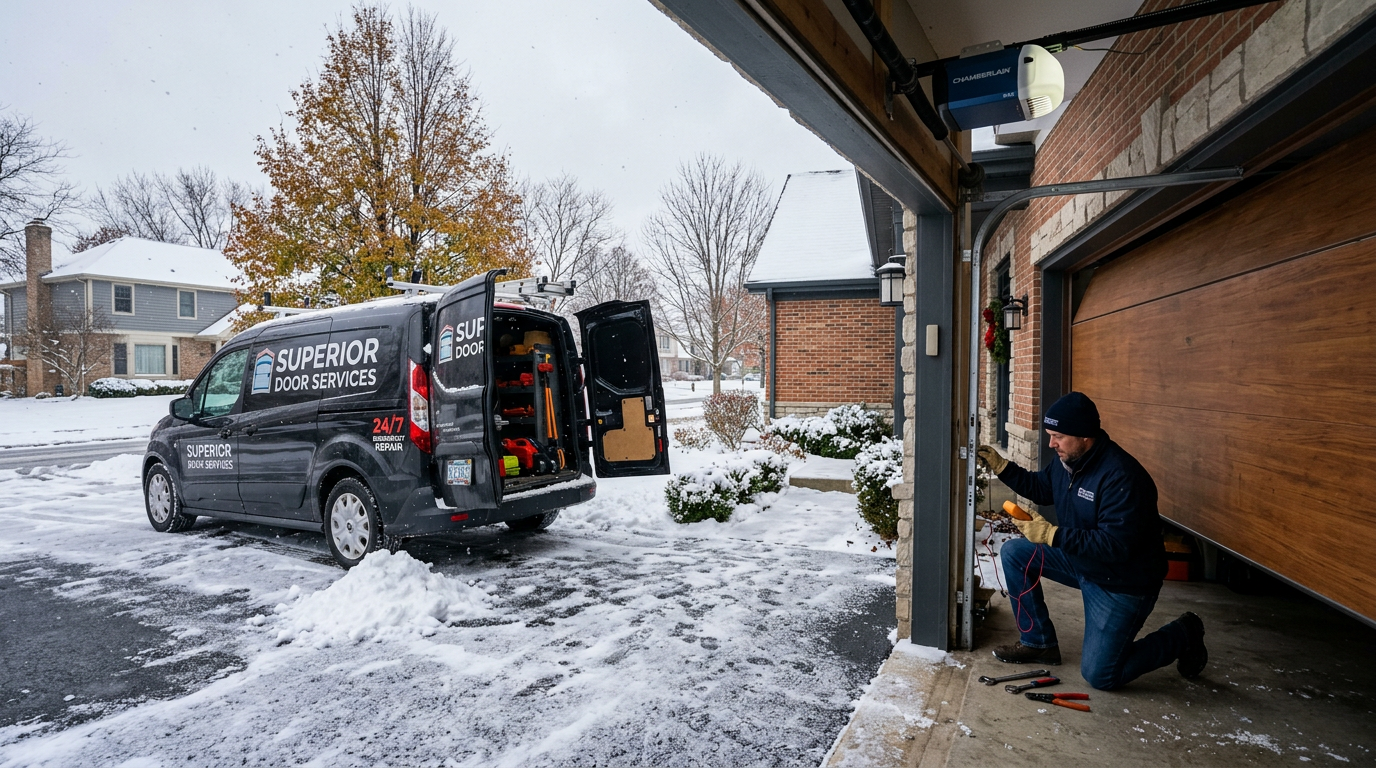
If your garage door opens, starts to close, and then reverses in winter, you are dealing with a safety decision from the opener, not random behavior. In Illinois, this usually comes from sensor visibility problems, cold-weather resistance in the door path, or force and travel settings that are now too tight for seasonal conditions. This guide gives you a practical homeowner process you can run safely in under 20 minutes, plus the exact boundary where do-it-yourself troubleshooting must stop and a trained technician should take over.
Why this failure pattern gets worse in Illinois winters
Illinois winter conditions combine low temperatures, freeze-thaw moisture cycles, and road-salt contamination. That combination affects the exact three systems your opener uses to decide whether to continue or reverse: safety sensors, travel resistance, and stopping force.
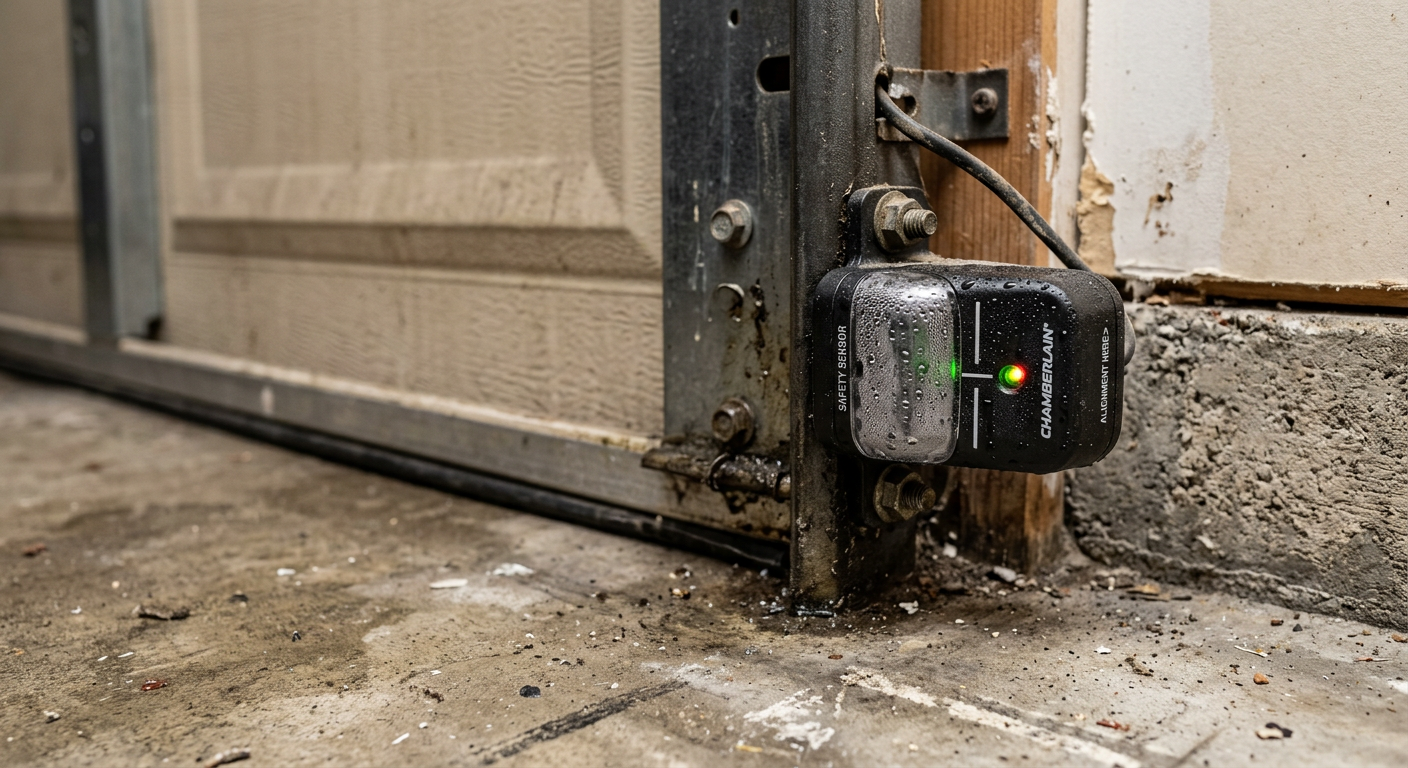
Sensor reliability drops first. A photo-eye pair must maintain a clean, uninterrupted light path. Condensation droplets, fogging, dirt, and slight bracket movement can break that path for milliseconds, which is enough to trigger a reverse event.
Mechanical resistance increases second. Cold weather thickens old lubricant and can make rollers, hinges, and weather seals drag more. If opener force settings are tuned tightly during warmer months, winter drag can cross the safety threshold.
Travel behavior shifts third. Minor contraction in metal tracks and slight floor heave near the threshold can alter how the door seats at the ground. The opener may interpret this as an obstruction and reverse at the final inches.
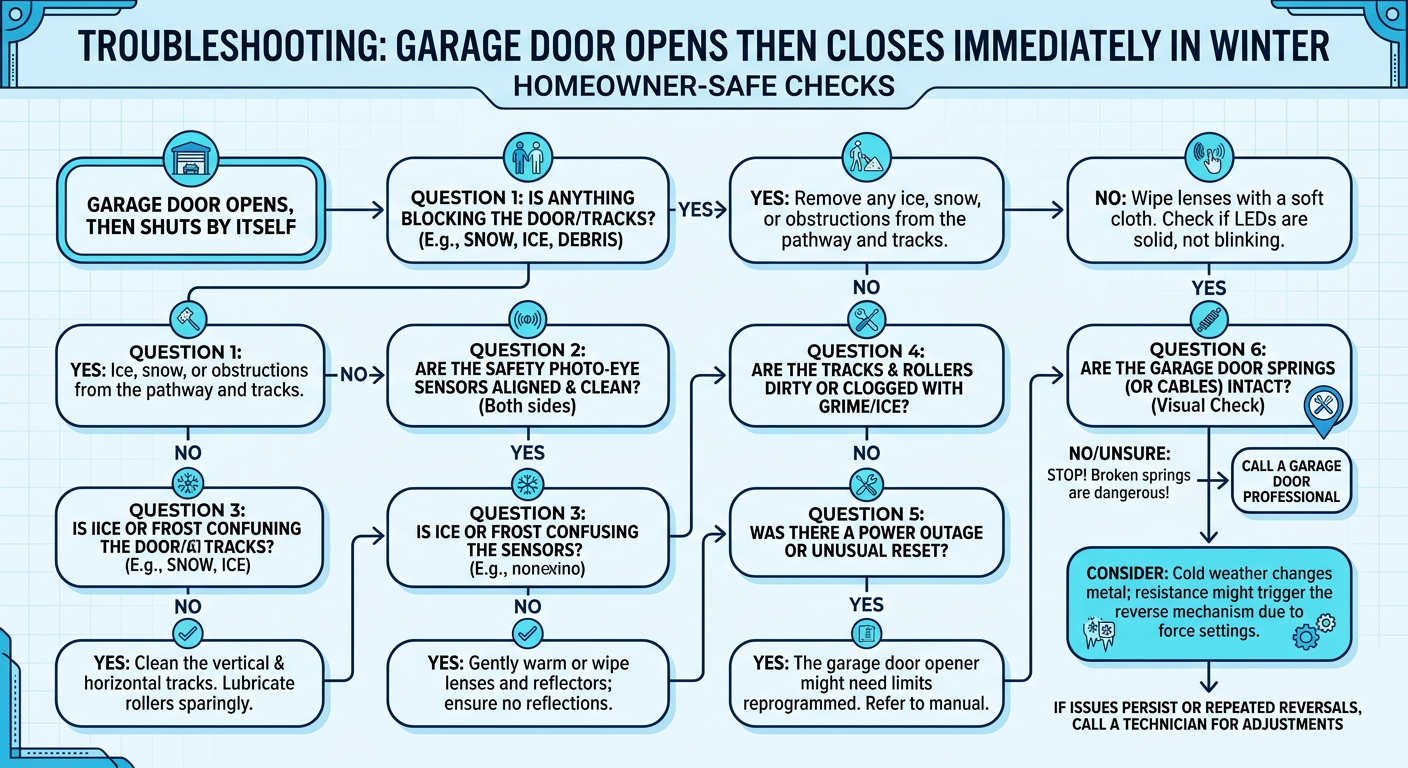
Homeowner diagnostic flow (safe checks only)
1) Confirm sensor status before touching force settings
- Clean both sensor lenses with a dry microfiber cloth.
- Check both sensor LEDs. You want steady, not flickering, indicators.
- Verify bracket alignment and cable strain. A bumped track can move the angle enough to break beam lock.
2) Check the door path for winter friction points
- Clear ice and packed debris along the threshold and lower track approach.
- Look for hardened weather seal sections that catch as the door closes.
- Inspect rollers and hinges for dry movement and visible wear.
3) Test door balance manually
- Disconnect opener using the release cord only when the door is fully closed.
- Lift door halfway by hand. It should hold near mid travel with minimal drift.
- If it drops, surges upward, or feels very heavy, stop. That is a spring/balance issue.
4) Re-run opener learn cycle if manufacturer supports it
Only after sensors and path are clean should you perform limit/force relearn per opener manual. Never over-increase force to hide a mechanical problem.
How to separate a quick adjustment from a real repair
Use this rule: if your door behavior improves immediately after cleaning sensors and clearing threshold drag, you likely had a winter-visibility or light-resistance issue. If the symptom returns within days, there is usually a deeper mechanical factor.
- Likely adjustment: sensor alignment drift, dirty lens, small threshold obstruction.
- Likely service call: repeated reverse cycles, loud pops, uneven travel, jerking, or heavy manual lift.
- Urgent service: visible spring gap, frayed cable, off-track roller, or crooked door panel line.
In practice, recurring reverse events are often a combination issue: one minor sensor problem plus rising friction from worn rollers or poor spring balance. Addressing only one side gives temporary relief, not durable reliability.
Illinois cost expectations for winter reverse complaints
| Service type | Typical scope | Expected range (Illinois) |
|---|---|---|
| Sensor realignment and cleaning | Bracket correction, lens cleaning, signal verification | $95-$180 |
| Opener force/limit recalibration | Travel tuning and safety test cycle | $120-$240 |
| Roller and hinge service | Friction reduction and component replacement | $140-$320 |
| Spring/balance repair | High-tension component service with full rebalance | $220-$520+ |
Final price depends on opener type, door weight, component availability, and whether a second issue appears during safety inspection. If your quote is low but skips balance and safety cycle verification, expect repeat failures.
Preventive winter setup to reduce reverse events
- Clean sensor lenses every 2-4 weeks during freeze-thaw months.
- Use garage-door-safe lubricant on hinges and rollers before winter cold sets in.
- Check bottom seal compression and threshold drainage after first hard freeze.
- Schedule a professional balance and safety tune-up if the door is over 8 years old.
- Run one manual open/close check monthly to detect resistance changes early.
FAQ
Why does my garage door reverse only when temperatures drop?
Cold weather amplifies sensor moisture issues and increases resistance in rollers, seals, and tracks. That can push the opener past its safe closing threshold.
Can I just raise opener force and ignore the issue?
No. Increasing force without fixing the underlying cause can hide a dangerous condition and reduce safety responsiveness.
How do I know if this is a spring issue and not a sensor issue?
If the door feels heavy manually, does not hold mid travel, or moves unevenly, suspect a balance or spring problem and stop DIY troubleshooting.
Is this problem common in Chicago suburbs and northern Illinois?
Yes. Freeze-thaw cycles and rapid humidity swings make intermittent reverse complaints common across the region in winter months.
Should I keep using the door until service arrives?
Only if the door is moving smoothly and safely for essential use. If it jerks, slams, or binds, leave it parked and schedule service quickly.