
Garage Door Repair in Wheeling, Illinois
A garage door fails on the coldest morning of the year. That is not bad luck. After fourteen years on driveways from Wheeling to Buffalo Grove, the pattern is plain: the parts that carry the weight of your door spend all winter fighting freeze-thaw, and they let go when the temperature drops hardest. This guide walks through what actually breaks here, what an honest repair costs, and how to tell a real diagnosis from a sales pitch.
Why garage doors break the way they do in Wheeling
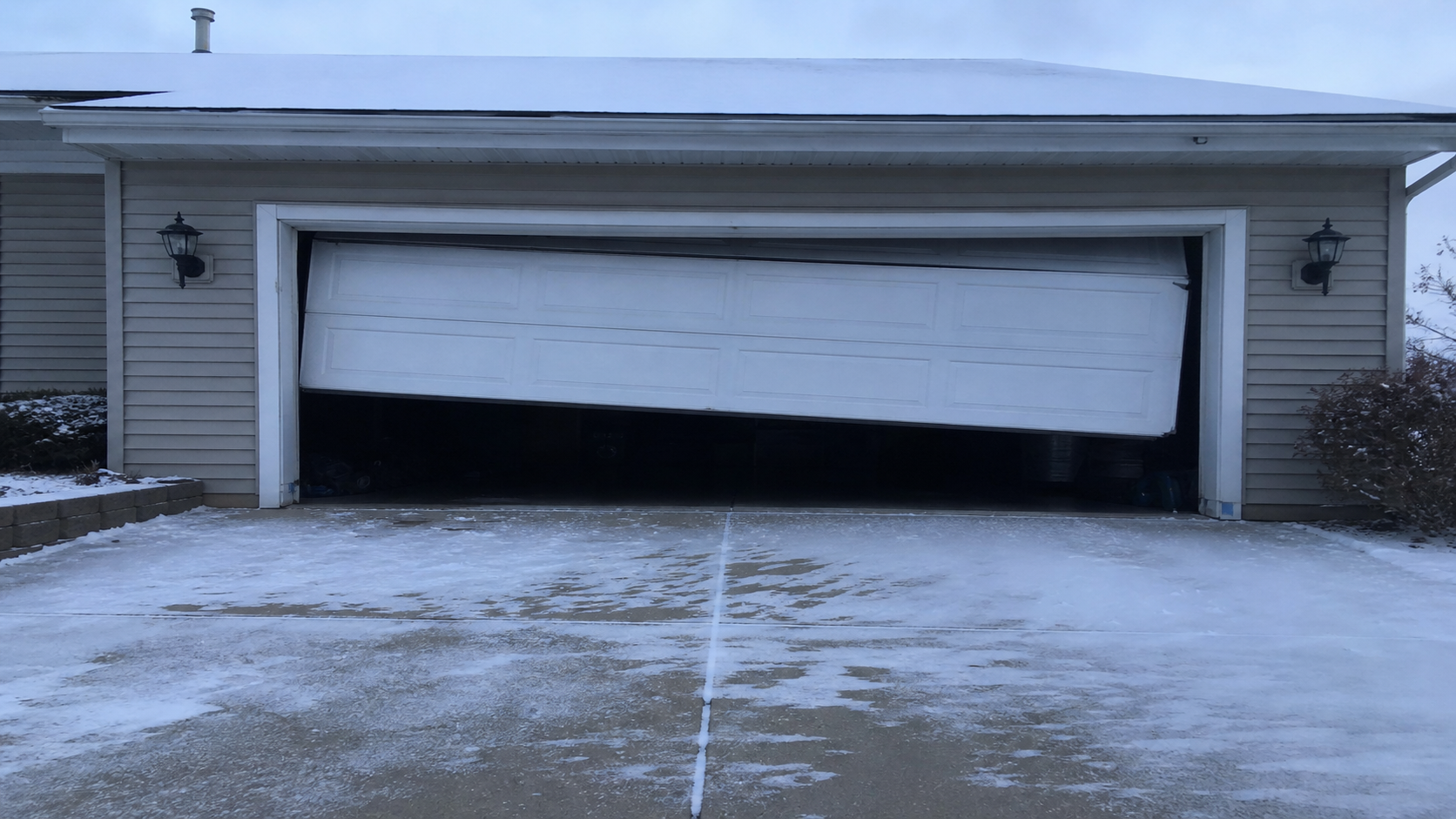
Wheeling sits in that part of Cook and Lake County where the temperature can swing thirty degrees in a single February day. Steel contracts in the cold and expands as the sun hits the panels. Grease in the bearings stiffens overnight, then loosens by noon. Do that a few hundred times a winter and the moving parts age fast.
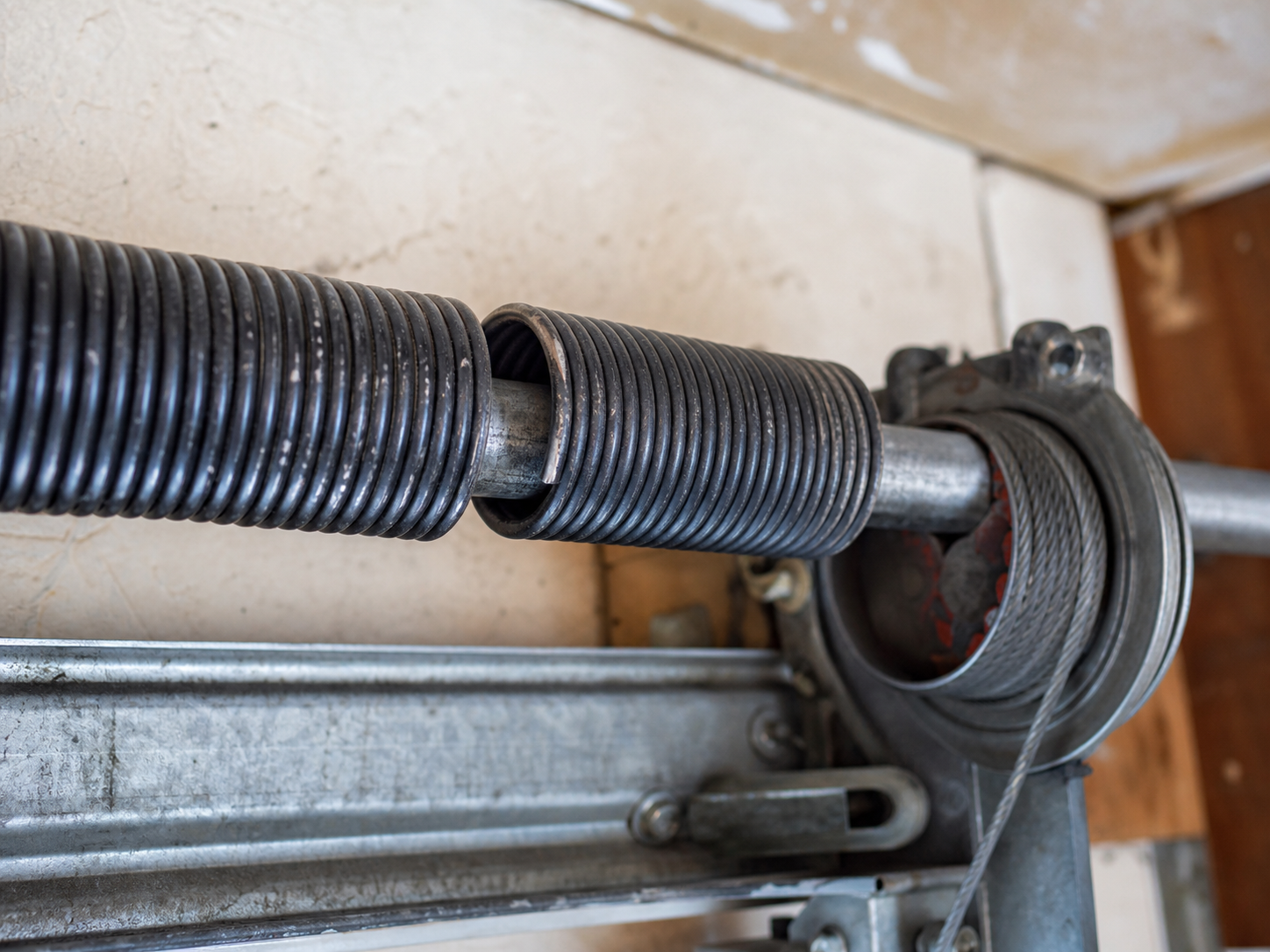
The single most common call we get from Wheeling and nearby Arlington Heights is a broken garage door spring repair. A torsion spring is rated in cycles, not years. Most stock springs are good for roughly 10,000 cycles, which sounds like a lot until you count a busy family opening the door four or five times a day. Cold makes the steel more brittle, so the spring that was already near its cycle limit snaps on a January morning instead of a mild one in April.
Here is the opinion I will stand behind: nine times out of ten, the door did not fail because it was a cheap door. It failed because a wear part hit the end of its life and nobody caught it during a balance test. A door is a system. When one piece quits, it loads everything else.
The parts that fail, and what each one does
When a torsion spring breaks, you will usually hear a bang like a firecracker in the garage, and then the opener strains and refuses to lift. The opener was never built to raise the full weight of the door. The spring does that work. Once it is gone, the lift cable, the drum, and the opener rail all take a beating if you keep hitting the button.
Below the spring, the garage door cable repair side of the job matters just as much. A lift cable runs from the bottom bracket up to the drum at the top. If it frays or jumps off the drum, the door can hang crooked or drop on one side. That is the moment a panel shift starts and a track alignment problem follows.
Other parts wear quietly. A worn roller stem makes the door jerk and grind in the track. A cracked hinge lets a panel sag. A failing bearing plate at the end of the shaft squeals every cycle. And the small stuff causes the calls people find most baffling: a misaligned photo eye or dirty safety sensor will stop the door from closing and leave the opener light blinking, with nothing actually broken at all.
How a proper diagnosis runs
A good technician does not start by quoting a new door. The first move is a balance test, and it tells you almost everything.
-
Pull the manual release
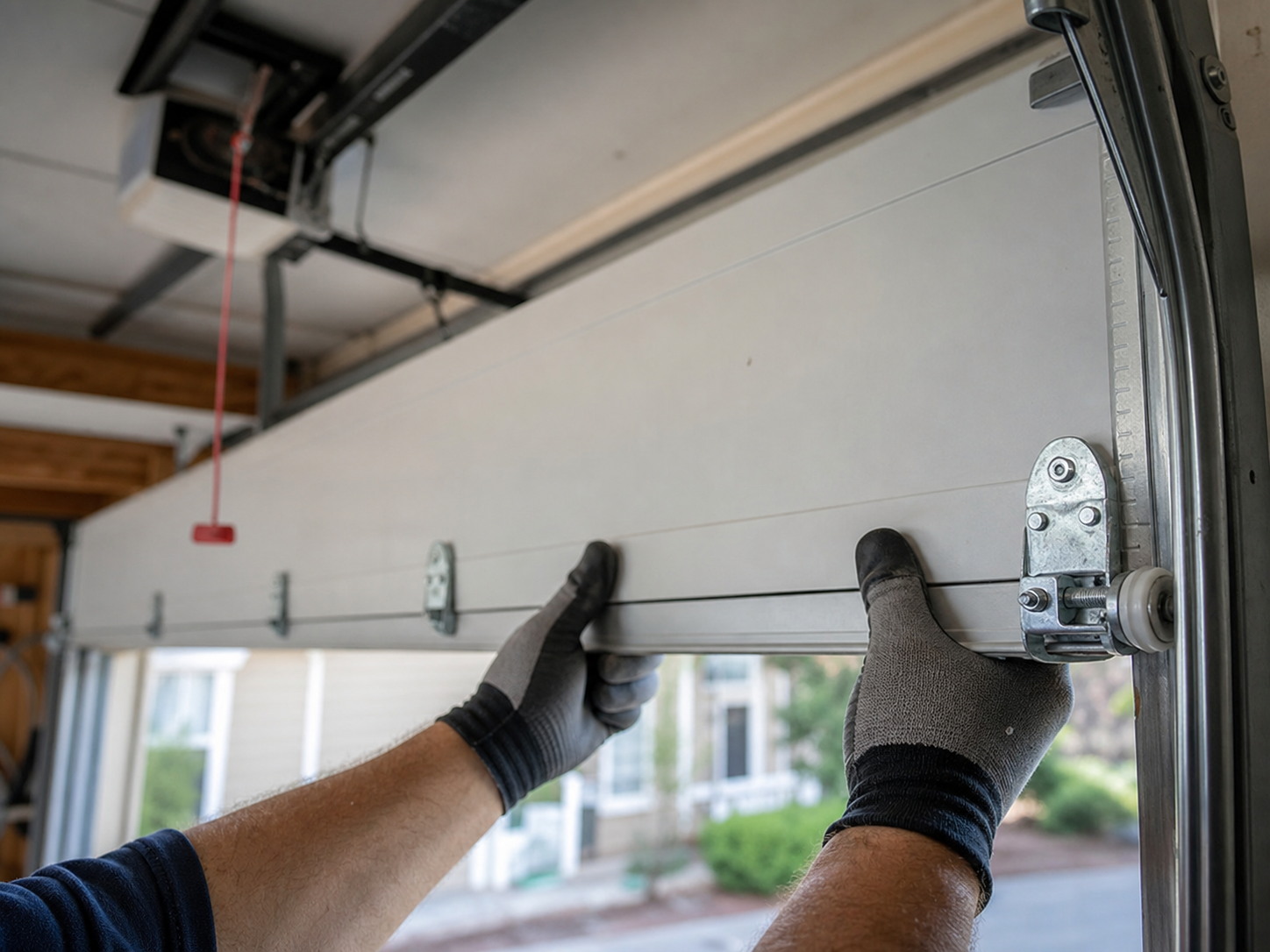
With the door down, the red cord disconnects the door from the opener rail so the door moves freely by hand. This separates an opener problem from a hardware problem in under a minute.
-
Run the balance test
Lift the door to about waist height and let go. A balanced door holds roughly in place. If it slams down, the springs are weak or wrong. If it flies up, the spring tension is too high. Either way, the force setting on the opener has been masking it.
-
Inspect cables, drums, and rollers
Check the lift cable for fraying near the bottom bracket, confirm both drums are seated, and roll each roller stem by hand. A flat spot or a seized bearing shows up fast.
-
Recheck the opener last
Only after the door itself is sound do you reset the travel limit and force setting, test the safety sensor reversal, and confirm the door reverses on contact. Tuning an opener to fight a bad spring just burns out the motor.
If your door is genuinely off-track or a panel has shifted, that is its own conversation. Our garage door roller repair and garage door opener repair pages walk through those symptoms in more detail, because noise and a dead opener each have their own short list of likely causes.
What garage door repair costs around Wheeling
Prices move, so treat these as honest 2026 ranges for the northwest suburbs, not a fixed quote. Labor here runs higher than the national average, and most companies charge a service call or diagnostic fee that often rolls into the repair if you proceed.
| Repair | Typical range | Notes |
|---|---|---|
| Torsion spring replacement | $250 to $450 | Replace both springs together; a lone new spring next to a tired one fails again fast. |
| Spring plus new lift cables | $300 to $500 | Common pairing when one side has been straining. |
| Lift cable replacement | $150 to $250 | Less if done alongside a spring job. |
| Opener repair or replacement | $150 to $650 | A logic-board or sensor fix is cheap; a full LiftMaster or Chamberlain unit is the top end. |
| Roller and hinge work | $120 to $300 | Depends on how many rollers and whether a bearing plate is involved. |
If you want to compare full job pricing before you call, our garage door repair pricing page lays it out without the games. A spring upgrade worth considering: high-cycle springs add roughly forty to sixty dollars each but last more than twice as long, which is money well spent in a freeze-thaw climate like ours.
When it is an emergency and when it can wait
A door stuck open is a real problem in an Illinois winter. It lets cold and snow into the garage, drops your heating efficiency, and leaves the house less secure. If a spring or cable lets go and the door is jammed open, that is worth an emergency garage door repair the same day.
A door stuck closed is usually less urgent, as long as you can get your cars out another way. The exception is a frayed cable or a visibly bent track, because forcing it can turn a $200 fix into a bent-panel job. When in doubt, stop hitting the button and pull the manual release.
I still remember a call in Northbrook two winters back: a homeowner had been forcing the opener against a broken spring for three days. By the time we arrived the opener gear was stripped, a roller stem had bent, and the bottom section had a fresh crease. A same-morning spring call would have been a few hundred dollars. It became a much longer afternoon. Catching it early is almost always the cheaper path.
Keeping your door healthy through Chicagoland winters
A door that gets a yearly look almost never strands you. The maintenance that actually matters here is simple: lubricate the springs, hinges, and roller stems with a proper garage-door lube each fall, wipe and reseat the safety sensors, replace a cracked weather seal before the cold sets in, and run a balance test so you catch a tiring spring before it snaps. A strut across a wide door panel keeps it from bowing in high wind. None of this is glamorous, and all of it is cheaper than a winter emergency.
If you would rather hand the whole list to someone, you can see everything we handle on our all garage door services page, or just request an inspection and we will do the balance test and tell you straight what, if anything, needs attention.
Frequently asked questions
How do I know if my garage door spring is broken?
The clearest signs are a loud bang from the garage, an opener that hums and strains but will not lift the door, and a visible gap in the torsion spring coil on the shaft above the door. You may also notice the door feels far heavier than usual when you try to lift it by hand after pulling the manual release. If you see a separated spring, stop using the opener and call for service before more parts get damaged.
Can I replace a garage door spring myself in Wheeling?
It is strongly discouraged. A torsion spring stores enough energy to cause serious injury, and the winding process requires the right bars, the correct spring size for your door weight, and a careful balance check afterward. The parts cost is only a small part of the job. A pro brings the right spring, replaces both at once so the balance holds, and tests the door under load. Sensors and minor cleaning are fine for a homeowner; anything under tension is not.
Why does my garage door reverse before it touches the ground?
This is almost always the safety system doing its job, but for the wrong reason. A misaligned photo eye, a dirty safety sensor lens, or a travel limit and force setting that are off will make the opener think it hit something. Start by cleaning and realigning the two sensors near the floor until both lights are steady. If it still reverses, the travel limit or force setting on the opener needs adjustment, which is a quick fix for a technician.
How long does a garage door repair take?
Most common repairs around Wheeling are done in one visit. A standard torsion spring and lift cable replacement runs about one to two hours including the balance test and opener tune. A roller or hinge job is similar. A full opener replacement takes a little longer because the new unit has to be mounted and its travel limit and safety sensors set. We diagnose first so you know the scope before any work starts.
Should I repair my old garage door or replace it?
If the panels are sound and only the springs, cables, rollers, or opener have worn out, repair is almost always the smart money. Those are wear parts on an otherwise good door. Replacement makes sense when multiple panels are cracked or shifted, the door is badly rusted, or you want better insulation for an attached garage in an Illinois winter. An honest balance test and a look at the panels will tell you which camp you are in.
Door acting up before the next cold snap?
Garage Doors Illinois serves Wheeling and the surrounding Chicagoland suburbs with a real diagnosis first, plain pricing, and same-day help when a door is stuck open. Get a balance test and an honest answer, not a sales pitch.
Call 847-789-1175