
Wheeling Garage Door Opener Repair: Summer Costs and Common Fixes
It is the first 90-degree week of the summer in Wheeling, the door goes up fine in the morning, and by mid-afternoon it just clicks and stops halfway. Nine times out of ten the homeowner thinks the motor is dead. Most of the time it is not. The opener got hot, the thermal protection tripped, and it shut itself off on purpose.
I have spent fourteen years on driveways across the northwest suburbs, and the pattern repeats every July. A door that worked flawlessly all winter starts acting up the moment the attached garage hits 110 degrees by lunchtime. Before you let anyone sell you a brand new unit, it helps to know what actually breaks in the heat, what a fair repair costs in 2026, and which problems you can sort out yourself in ten minutes.
Why summer is hard on a garage door opener
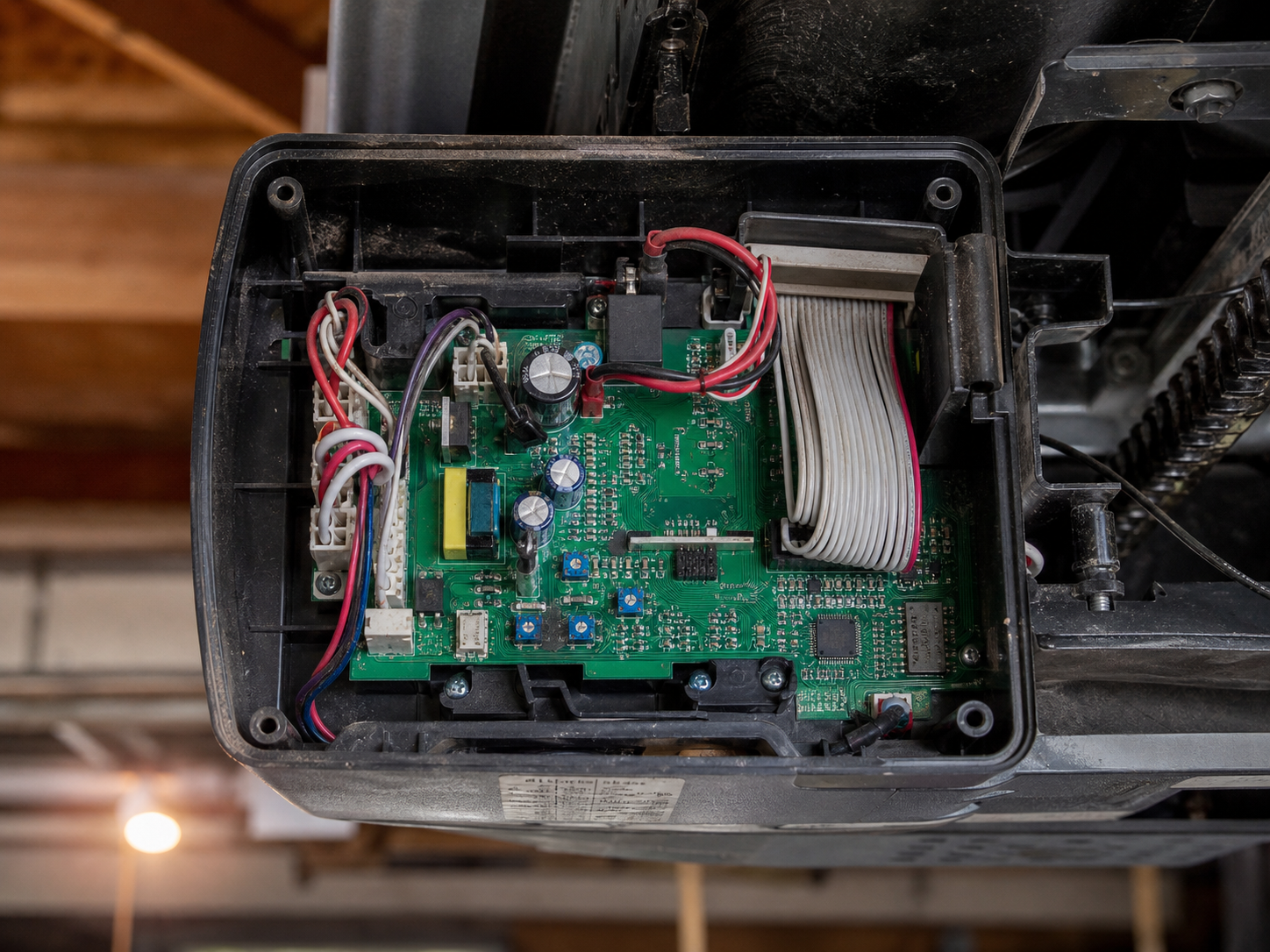
An attached garage in Buffalo Grove or Arlington Heights with a west-facing door is basically a solar oven by 3 p.m. The opener head hangs from the ceiling, which is the hottest air in the room, and the components that hate heat the most live right inside it: the logic board, the capacitor, and the plastic gear housing on the motor.
Most LiftMaster, Chamberlain, and Genie units built in the last fifteen years have a thermal overload feature. When the motor windings climb past a set temperature, the unit cuts power to protect itself. That is not a failure. That is the opener doing its job. If you have cycled the door four or five times in fifteen minutes hauling kids, bikes, and lawn gear in and out, you have probably tripped it.
The four summer failures we see most
1. Tripped thermal protection
The door stops mid-travel, the light may blink, and twenty minutes later it works again. This is heat, not hardware. No part needed. If it keeps tripping after the garage cools, the capacitor may be weak and worth checking.
2. Photo eye and safety sensor drift
Heat and a little summer humidity can fog or shift the photo eye lenses near the floor, and a sun beam hitting the receiver at the wrong angle will make the door refuse to close. If your door opens fine but reverses every time it tries to close, wipe both safety sensor lenses and confirm both LEDs are steady, not blinking.
3. Logic board failure
This is the real repair. Cooked solder joints and a heat-stressed board show up as random behavior: the door opens on its own, the remote works intermittently, or the unit is just dead with no thermal recovery. A logic board is a genuine part replacement, not a reset.
4. Travel and force settings drifting out of range
As the door and the metal track expand in the heat, a door that was balanced in January can start hitting the floor too hard or stopping short. That is a travel limit and force setting adjustment. It takes a few minutes and it is one of the most common tune-ups we do all summer.
What opener repair actually costs in 2026
Here are the ranges we are quoting across Wheeling, Northbrook, and the surrounding towns this season. Parts pricing moved up a little over last year, but the relationship between repair and replacement has not changed: a repair almost always wins until the unit is more than about twelve years old.
| Job | What it covers | Typical cost |
|---|---|---|
| Diagnostic visit | Full inspection and balance test | $75 to $125 |
| Sensor realignment | Photo eye cleaning and re-aiming | $95 to $160 |
| Travel and force reset | Limit and sensitivity adjustment | $110 to $180 |
| Logic board replacement | New board, programmed and tested | $200 to $350 |
| Motor or full head repair | Motor, capacitor, or gear assembly | $300 to $700 |
| New opener installed | Replacement unit, labor included | $460 to $765 |
Ranges reflect mid-2026 northwest-suburban pricing and vary with brand, drive type, and door weight. A heavy insulated door pulls more current and can push a repair toward the top of a range. Our full garage door repair pricing page breaks this down further.
One honest note on the repair-versus-replace math. LiftMaster and Chamberlain share a lot of internal parts, so boards and gears for those are usually cheaper and faster to source. If your opener is a name you have never heard of and parts are on a slow boat, a replacement can quietly become the better value even when the repair is technically possible.
Five things to check before you call
Plenty of summer “failures” are five-minute fixes. Run through these before you pay for a visit. None of them require taking the opener apart.
- Wait fifteen minutes. If the door quit mid-cycle on a hot day, let it cool and try again. A thermal trip clears itself.
- Pull the manual release and lift by hand. If the door is heavy, sticky, or slams down, the problem is the door balance, not the opener, and the torsion spring needs a look.
- Clean both photo eyes. Wipe the lenses, confirm they point at each other, and check that both LEDs glow steady.
- Check the wall button and the breaker. A summer storm in Glenview can trip a GFCI outlet and leave the whole opener dead with no warning.
- Look at the opener rail and trolley. If the chain or belt is loose or the carriage is hung up, the door will struggle even when the motor is fine.
If you have run all five and the door still will not behave, that is the point to bring someone out. A snapped lift cable or a door off its track is not a wait-and-see situation, and our emergency garage door repair line covers exactly those after-hours calls.
When the opener is fine and the door is the problem
Here is the part most homeowners miss. The opener is only built to guide a door that a spring is already doing the heavy lifting on. If the door is out of balance because a spring is tired, the opener strains, overheats, and trips. People replace a perfectly good opener and the new one trips two weeks later, because the real culprit was the door.
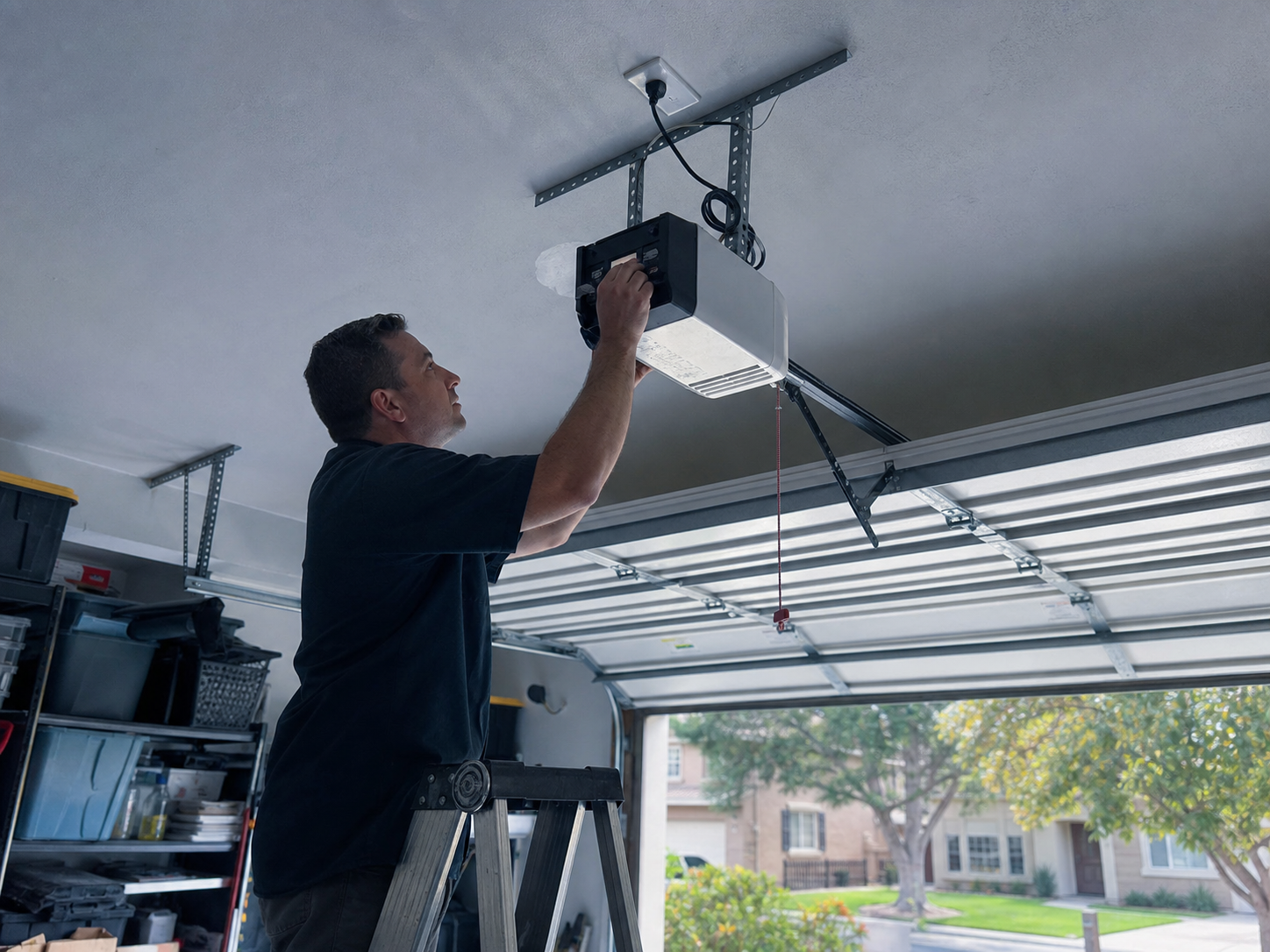
A thirty-second balance test settles it. Pull the manual release, lift the door halfway, and let go. A balanced door stays put. If it drops or shoots up, the spring system is off, and no amount of opener work will fix it. Browse our full list of garage door services if you are not sure which problem you are looking at.
Frequently asked questions
Why does my garage door opener stop working only in the afternoon?
That timing almost always points to heat. An attached garage in the northwest suburbs can climb well over 100 degrees by afternoon, and the opener’s thermal protection cuts power to the motor once it overheats. It usually recovers on its own within fifteen to twenty minutes once things cool down. If it keeps happening after the garage cools, the capacitor or logic board may be heat-stressed and worth inspecting.
Is it cheaper to repair or replace a garage door opener in 2026?
For most units under about twelve years old, repair is the better value. A logic board runs roughly $200 to $350 installed, while a full replacement with labor lands around $460 to $765. Replacement makes sense when the motor is failing, parts for an off-brand unit are hard to source, or the opener has needed several repairs already in a short span.
Can I fix a garage door opener that keeps reversing before it closes?
Often, yes. A door that opens fine but reverses on the way down is usually a safety sensor problem. Clean both photo eye lenses near the floor, make sure they aim directly at each other, and confirm both indicator lights are steady rather than blinking. Strong summer sun hitting the receiver lens can also cause it, so shading the eye can help. If the lights stay solid and it still reverses, the travel and force settings likely need adjusting.
How often should I run the door in a heat wave?
Try to limit it to once every fifteen minutes during the hottest part of the day. Repeated cycles in a short window are the single most common reason an opener overheats and trips its thermal protection in summer. Spacing out the cycles gives the motor time to shed heat and keeps you from mistaking a healthy opener for a failing one.
Door acting up in the heat?
We will run a real diagnosis and a balance test before quoting a dollar of parts. Honest pricing, same-day help across Wheeling and the northwest suburbs.
Request an inspectionOr call 847-789-1175