

Garage Door Opener Runs But the Door Won’t Move in Wheeling, Illinois
You hit the button and the opener hums to life. The chain or belt turns, the light clicks on, maybe the whole unit shudders a little. The door just sits there. Your car is trapped, and you have somewhere to be. Nine times out of ten this is a quick, safe fix. The other one time, forcing it turns a simple repair into a bent panel and a much bigger bill.
I have been in the trade for fourteen years and run thousands of these calls across Wheeling, Buffalo Grove, and Arlington Heights. The pattern almost always starts the same way: a power outage, or somebody pulled that red rope during the outage to get the car out by hand. Then the power comes back, the opener runs, and nothing happens. Let me walk you through exactly what is going on and how to get the door moving again without hurting yourself or the door.
First, understand what “runs but won’t move” actually means
The opener and the door are two separate systems bolted together. The opener is just a motor that drags a small connector, the trolley, along the opener rail. That trolley is what physically pulls the door up. When the motor turns but the door stays put, it means the motor and the door have lost their handshake. Something between the two is disconnected, broken, or jammed.
There are really only a handful of culprits. The good news is you can tell them apart in about two minutes standing in your garage, and the first one you can usually fix yourself.
The number one cause after an outage: the manual release is still pulled
Every opener has a manual release, that red cord dangling from the rail. Pull it and the trolley pops free of the door so you can lift the door by hand. It exists for exactly the moment you had: power is out, you need the car, so you yank the rope and drive off. When the power returns, the motor runs along the rail like normal but the trolley is still disconnected, so it grabs nothing. The door never moves.
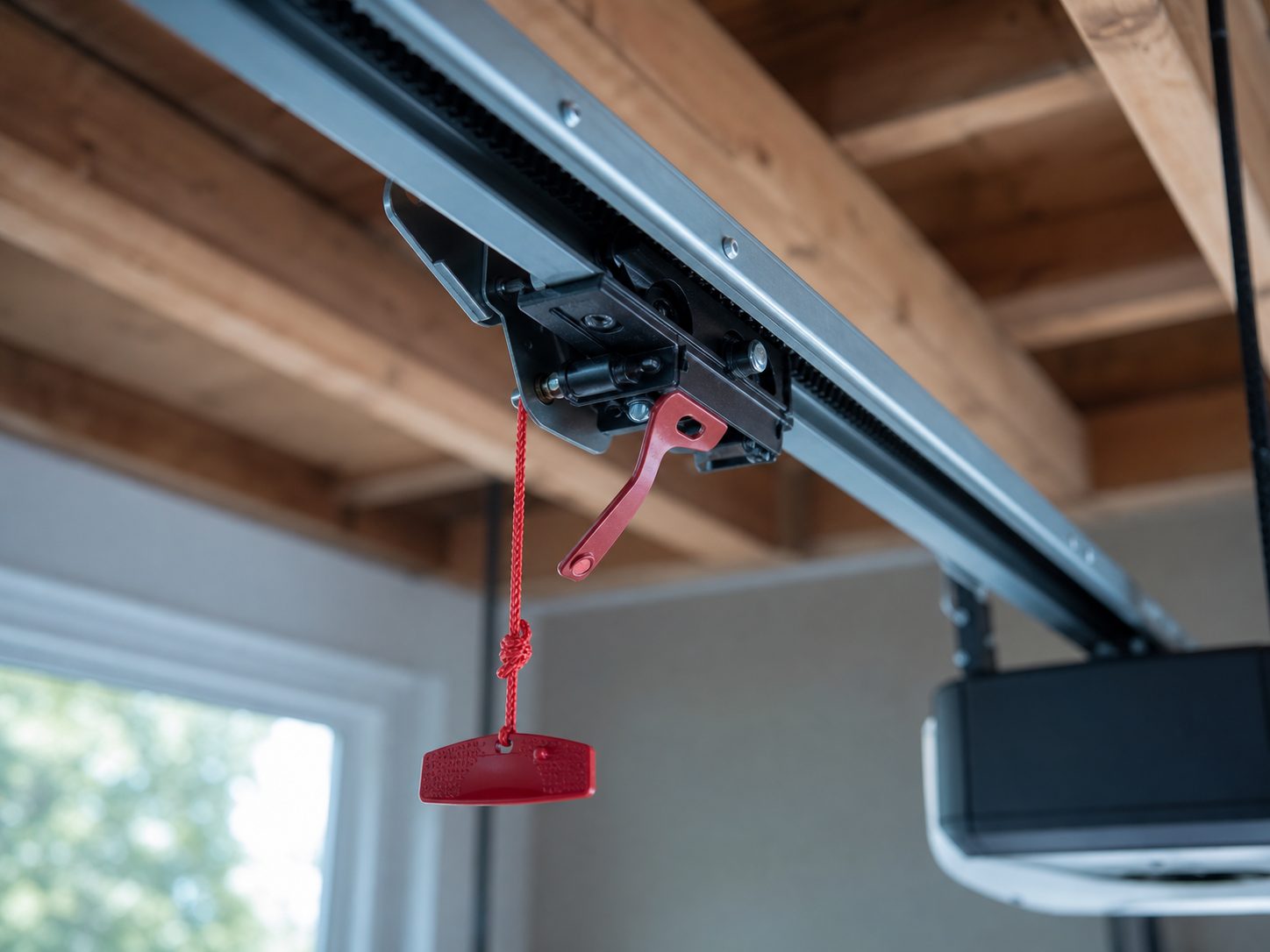
Here is how to tell: look up at the rail while a helper presses the button. If the trolley slides back and forth but the door stays dead, the release is disengaged. This is the best case. You can reconnect it yourself in a minute, and I will show you the safe way below. Do not skip the “door fully closed” part. I have seen a homeowner in Northbrook try to re-latch the trolley with the door halfway up, and gravity did the rest. It is not a small thing.
When it is not the trolley: a broken spring or a snapped cable
If the trolley is connected and the door still will not move, or it starts up a few inches and stalls, the problem has moved into the lifting hardware. This is where a lot of DIY attempts go sideways.
The most common mechanical failure is a broken torsion spring. That is the tightly wound spring on the metal shaft above the door. It does the real lifting; the motor only guides. A garage door in Illinois goes through a brutal freeze-thaw cycle every winter, and cold steel fatigues faster. Most springs are rated around 10,000 spring cycle counts, which for a busy family is roughly seven years. When one snaps, you often hear a loud bang like a gunshot from the garage, and after that the opener strains against a door that suddenly weighs 150 pounds on its own. If you see a clear gap in the spring coil, stop. That is a garage door spring repair, and torsion springs are the one job I genuinely tell homeowners to leave alone. The wind-up tension can break a wrist.
The next suspect is a lift cable. Those steel cables run from the bottom bracket at the base of the door up to the drum at each end of the spring shaft. If a cable frays, slips off the drum, or snaps, the door goes crooked, binds in the track, and the opener either stalls or drags one side up while the other stays put. A cable off the drum is a fast fix for a tech but a dangerous one to improvise, since the door is under load. That is garage door cable repair territory.
The two-minute balance test that tells you which it is
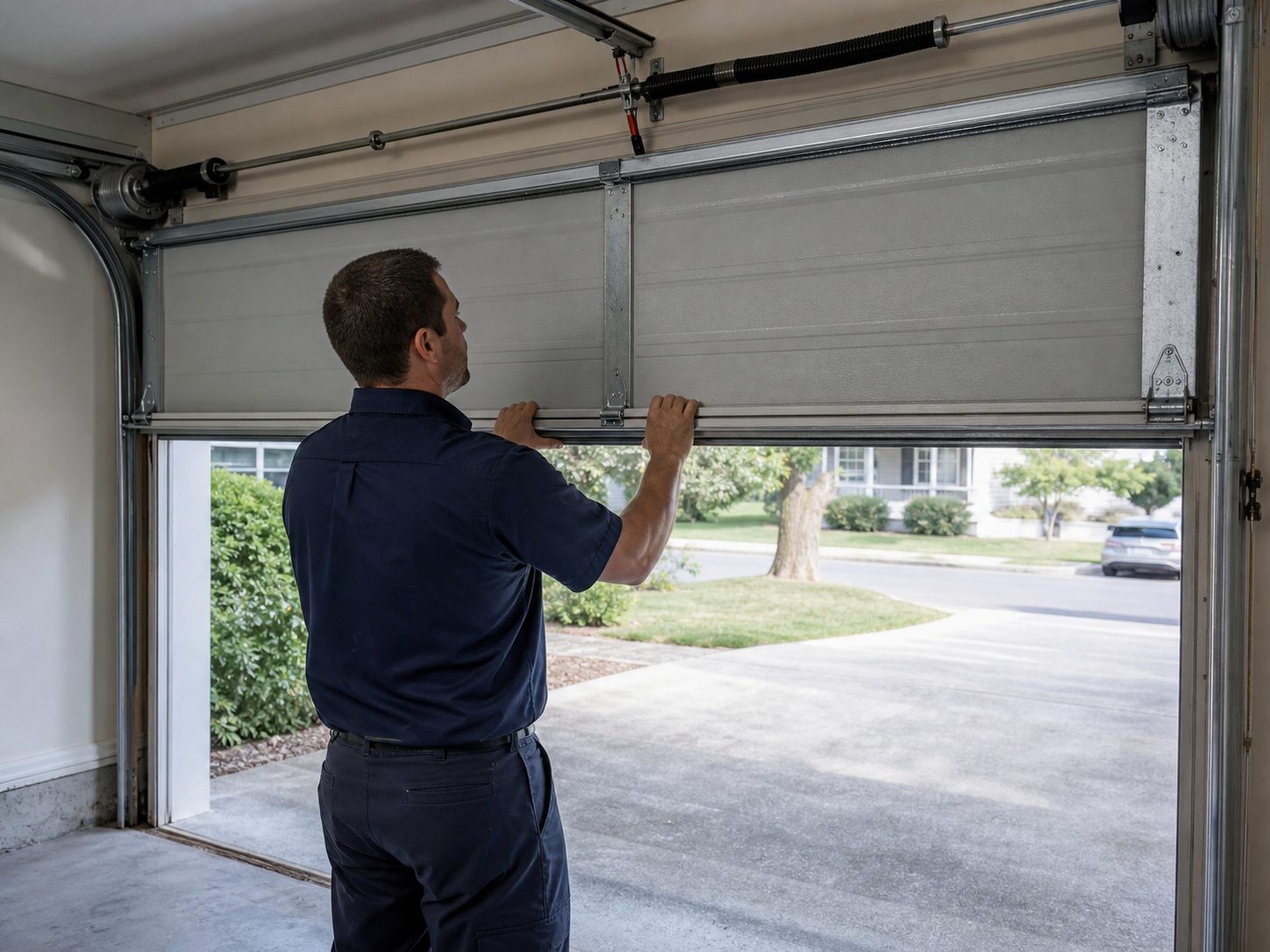
With the manual release pulled and the door all the way down, lift the door by hand to about waist height and let go. This is the balance test, and it is the single most useful thing a homeowner can do. A door with healthy springs floats and holds its position. If it slams back down or feels like you are deadlifting it, the springs are done and the motor was never the problem. If it lifts smooth and easy, your issue is up on the rail, and you are probably back to the manual release or the opener itself.
The safe reset: reconnect and get the door moving again
If your balance test was fine and the trolley was just disengaged, follow these steps in order. Do not rush the sequence.
- Close the door completely. Lower it by hand until it is flat on the floor. The door must be fully down before you touch the trolley.
- Re-engage the trolley. Pull the red cord back toward the door (not straight down) until the lever clicks into the connected position. On some openers you instead run the motor and the carriage relatches automatically.
- Run one full cycle from the wall button. Press open, let it travel all the way up, then press close and let it seat fully on the floor. Stand clear and watch it move.
- Watch the safety sensors. After an outage the photo eye sensors near the floor can lose alignment. If the door reverses on the way down, check that both safety sensor lights are solid, not blinking.
- Reset the travel limits if needed. If the door now opens or closes only partway, the travel limit and force setting may have reset during the power loss. The adjustment screws are on the back of the opener head.
What this actually costs in the north suburbs
Homeowners always want a real number, so here are honest 2026 ranges for the Wheeling and Cook County area. Reconnecting a trolley is free if you do it yourself. Beyond that, you are into parts and labor.
| Repair | Typical range (parts + labor) |
|---|---|
| Torsion spring replacement (done in pairs) | $250 to $450 |
| Single lift cable replacement | $150 to $250 |
| Opener travel and force recalibration | $95 to $160 service call |
| Trolley or carriage replacement on the rail | $180 to $320 |
A quick word on springs: when one goes, replace both. They wear at the same rate, so a matched pair keeps the door balanced and saves you a second trip fee when the other lets go a month later. You can see our full garage door repair pricing before anyone comes out. No surprise line items, and no upsell on parts you do not need.
When to just call a pro
DIY the manual release and the sensor alignment all day. Those are safe. Draw the line at anything under spring tension. If the balance test fails, if you see a snapped torsion spring, if a lift cable is frayed or off the drum, or if the door is visibly crooked in the track, that is pro-only work. The hardware is holding a lot of stored energy, and it does not forgive mistakes. We cover Wheeling, Buffalo Grove, Arlington Heights, and the surrounding Chicagoland suburbs, usually same day. If you want a second opinion before you spend anything, request an inspection and send a photo of the spring first.
Door still stuck? Let’s get your car out today.
Same-day service across Wheeling and the north suburbs. Honest diagnosis, upfront pricing, no pressure. Send a photo and we’ll tell you if it’s a five-minute fix or a real repair.
Request an inspectionOr call us directly at 847-789-1175.
Frequently asked questions
My opener runs for a few seconds then stops and reverses. What is that?
That is usually the opener hitting a mechanical wall it cannot push through. If the trolley is connected, the door is likely binding on a bad spring, a cable that slipped the drum, or a roller stem out of the track. The opener senses the extra resistance through its force setting and reverses to protect itself. Do a balance test before anything else, because a failed test points straight at the springs rather than the motor.
Can I just lift the door by hand until a technician arrives?
Only if your balance test passed and no spring is broken. With the manual release pulled and healthy springs, a door lifts easily and holds position, so you can raise it to get the car out. If the door feels extremely heavy or drops when you let go, a spring is broken and you should not lift it. All that weight is being held by hardware that has already failed, and it can slam down hard.
Does a power outage really break garage door parts?
The outage itself rarely breaks anything mechanical. What it does is force people to use the manual release and lift the door by hand, and that is when a spring already near the end of its life finally snaps under the manual strain. The outage also wipes the opener’s travel limit and force memory on some units, so the door opens or closes only partway afterward. That part you can recalibrate yourself on the opener head.
How do I know if it is the spring or the opener that failed?
The balance test settles it in two minutes. Pull the manual release, close the door, then lift it by hand to waist height. If it holds, the lifting hardware is fine and your problem is the opener, the trolley, or the sensors. If it crashes down or feels like a deadlift, the torsion spring is your issue and no amount of opener work will fix it. Looking up at the spring for a visible gap in the coil confirms it.
One last thing from the field. When your door starts acting up right after a Midwest winter storm, resist the urge to keep hammering the button. Each forced attempt against a jammed or unbalanced door can bend a panel, pop a roller stem, or chew up the opener gear. Diagnose first, force nothing, and you will almost always come out ahead.