

My Garage Door Has Hail Dents. Will Insurance Pay?
A storm rolls through, and the next morning your steel garage door looks like a golf ball. Dimples across two panels, a bright dent near the bottom, maybe the door hitches on the way up now. The first question every homeowner asks me is the same one: is this covered, or am I paying for it myself?
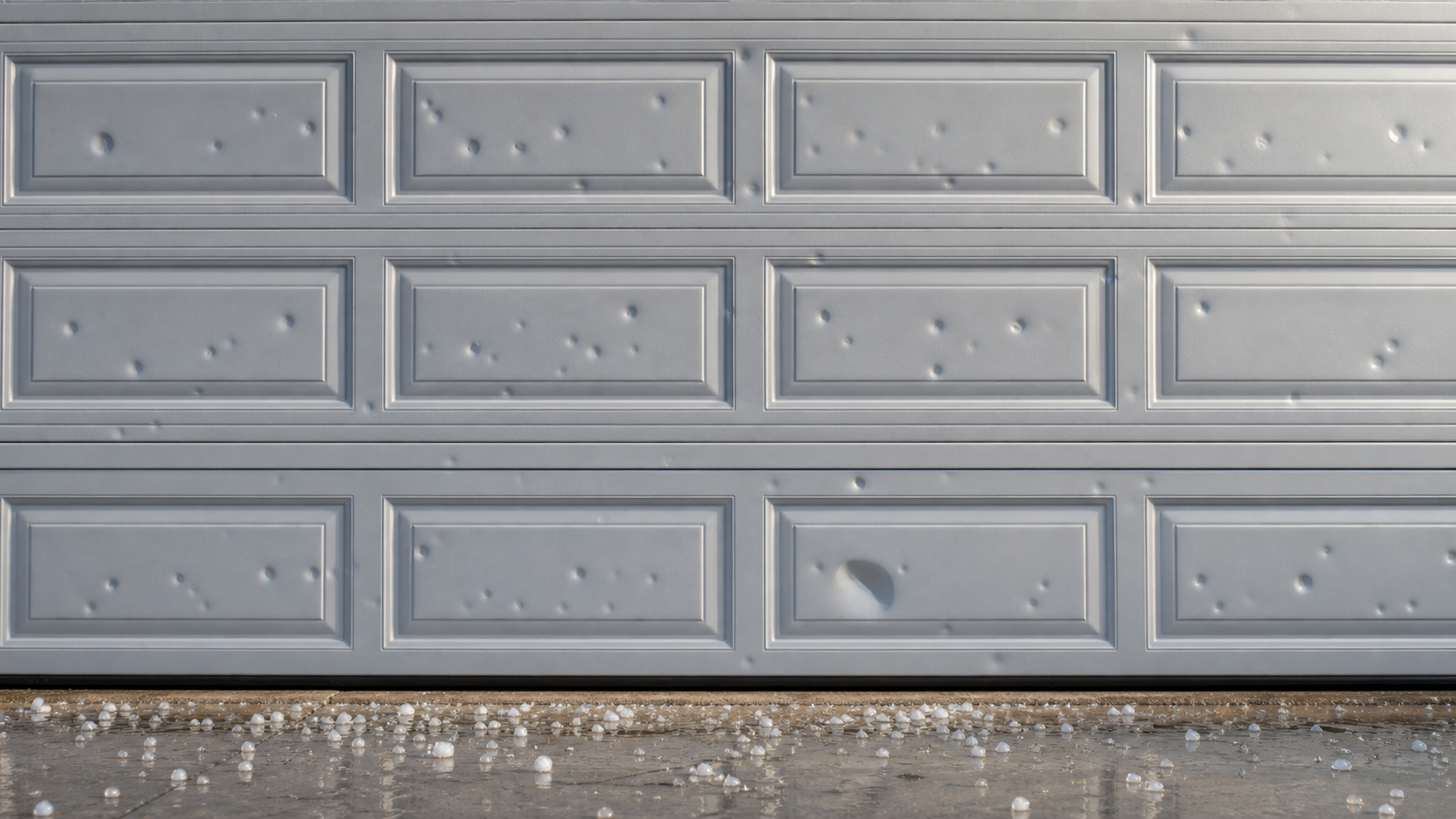
Short answer: hail damage to a garage door is usually covered under a standard Illinois homeowners policy, because hail is a named peril right alongside wind, fire, and vehicle impact. The longer answer is the one that decides whether filing is worth it. It comes down to your deductible, whether the door still works, and how a good technician versus an adjuster reads the difference between cosmetic dents and real structural damage.
I have spent 14 years on driveways across the northwest suburbs, and hail season keeps getting rougher. Illinois sits in one of the hardest-hit hail corridors in the country, so every bad spring storm means another round of dimpled doors on the same blocks. So no, you are not imagining it, and you are not alone on your street.
Is hail damage actually covered?
In almost every case, yes. Hail is a covered peril on standard HO-3 policies, which is what most homes in Arlington Heights, Buffalo Grove, and Northbrook carry. The door is part of the dwelling structure, so it falls under your dwelling coverage rather than the personal-property side. That matters because dwelling claims are typically paid on a replacement-cost basis if your policy has replacement cost coverage, instead of the depreciated actual-cash-value figure.
Where people get surprised is the deductible. Illinois carriers increasingly split it into two numbers. There is your standard deductible for things like theft or a burst pipe, often $1,000 or $2,500. Then there is a separate wind and hail deductible, which many policies now write as a percentage of your dwelling coverage, commonly 1% to 5%. On a home insured for $400,000, a 2% wind and hail deductible is $8,000 out of pocket before the policy pays a dime. Pull your declarations page and find that number before you do anything else. It is the single fact that decides everything.
Cosmetic dents versus real damage
This is the part an adjuster and a garage-door tech can see very differently, and it is where you protect yourself. Not every dent is created equal.
Cosmetic only: shallow dimples across the face of a steel panel, paint chips, a scuffed section. The door still runs smooth, the balance test passes, and nothing binds. Ugly, but mechanically fine.
Functional damage: this is what turns a cosmetic complaint into a legitimate claim and a safety issue. Hail and the wind that comes with it can knock a section out of true, causing a panel shift where the seam no longer lines up. A big impact near the bottom can tweak the bottom bracket or bend a hinge, so the door racks as it travels. If wind ripped the door partway open and then slammed it, you can end up with track alignment problems, a bent roller stem, or a lift cable that jumped off the drum. On a torsion setup, a violent cycle in a storm can even shorten the life of the torsion spring. None of that is cosmetic, and all of it is claimable.
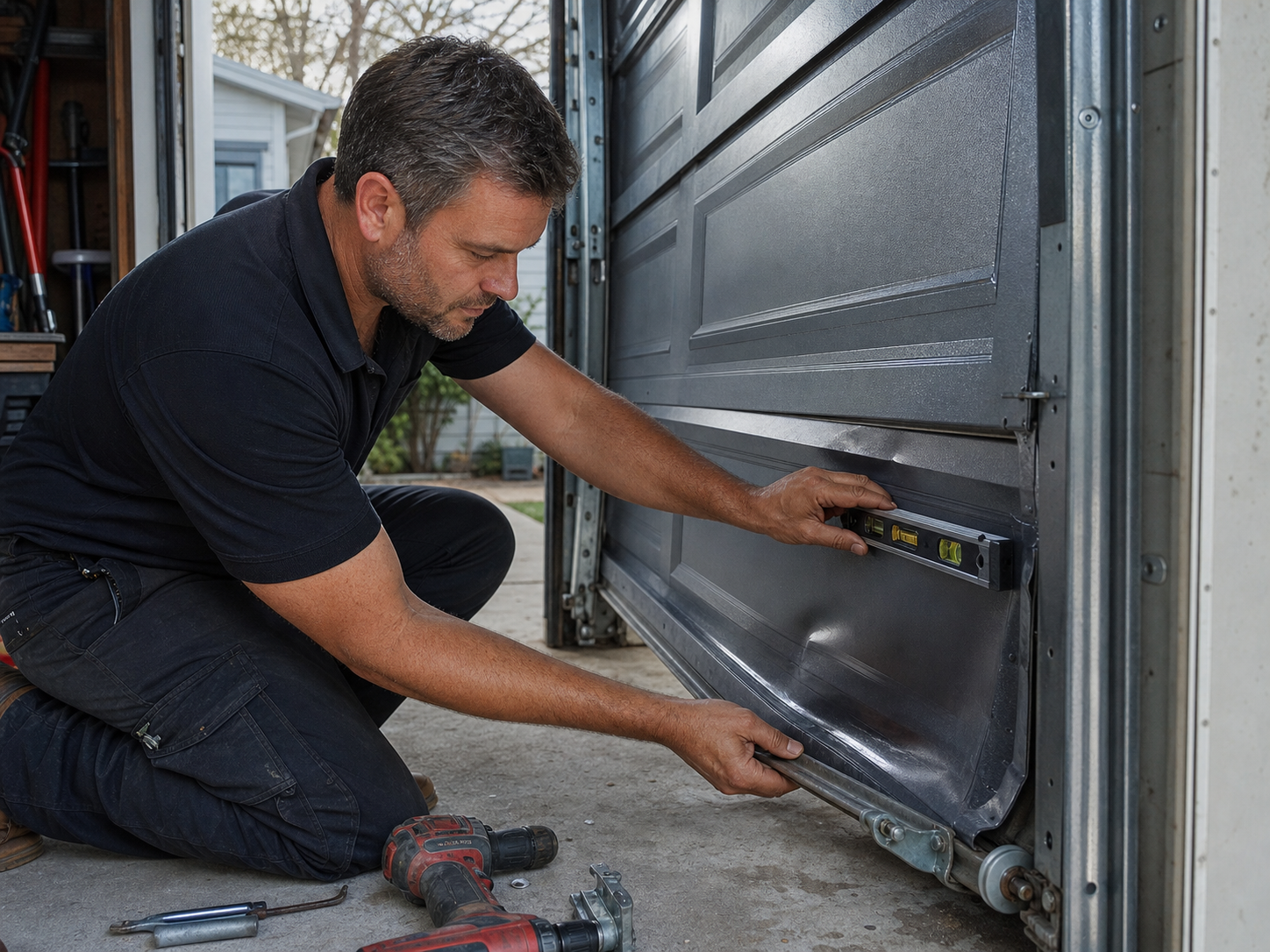
When we inspect a hail-hit door, we are not counting dimples. We are checking whether the door is safe and whether it will keep working through an Illinois winter, when freeze-thaw swings and cold make any hidden misalignment worse. A door that “still opens” today can bind badly in January if a panel shifted or a roller is dragging.
If your door is grinding, catching, or off balance after a storm, treat it as urgent. That is a emergency garage door repair situation, not a wait-and-see one, because a straining opener and a stressed spring get more expensive the longer they run out of true.
What a repair or replacement actually costs
Numbers help you decide whether a claim makes sense against that deductible. A single dented panel, if the door model is still made, can often be swapped for a few hundred dollars rather than replacing the whole door. Hardware fixes are usually the smaller line items: realigning track, replacing a bent bracket or a hinge, or reseating a lift cable on the drum. A full replacement door runs roughly $800 to $4,000 installed depending on size, steel gauge, insulation, and whether you go with a carriage-house look.
Because the range is wide, an honest quote is your strongest card in a claim. You can see typical figures on our garage door repair pricing page, and browse the full menu of all garage door services so you know what a normal estimate includes before an adjuster hands you theirs. If the spring took a hit during the storm, our garage door spring repair page walks through why that is pro-only work. Cable and roller issues, which storms love to cause, are covered on our garage door cable repair and garage door roller repair pages.
How to start a hail claim the right way
- Read your declarations page first. Find your wind and hail deductible. If it is a percentage, do the math on your actual dwelling amount, not a guess.
- Photograph everything while it is fresh. Wide shots of the door, tight shots of each dent with a coin for scale, and photos of any binding or gaps. Do it before hail melts and before you touch anything.
- Get an independent repair estimate. A written number from a garage-door pro, not just a roofer bundling the door into a whole-house claim, tells you if the loss beats your deductible.
- File with your carrier and note the date of loss. Match it to the storm date. Illinois carriers track storm events, and a clear date of loss keeps your claim clean.
- Be present for the adjuster. Walk them through the functional problems, the panel shift, the failed balance test, the tweaked track alignment, not just the dents. That is what moves a claim from cosmetic to covered.
One more field note from a Wheeling job last spring. A homeowner nearly took a $600 cash settlement for “cosmetic” dents. When I ran the door, the bottom section had shifted and the weather seal no longer met the floor, so wind-driven rain was getting in. That reframed the claim entirely, and the carrier covered a proper panel and hardware repair instead of a paint touch-up. The lesson: get the door read by someone who fixes them, not just someone who prices siding.
Frequently asked questions
Will filing a hail claim raise my premium?
A single weather-related claim in Illinois usually affects your rate less than an at-fault liability claim, and hail is considered a non-preventable act of nature. That said, multiple claims in a short window can matter, so it is worth weighing a small cosmetic claim against simply paying out of pocket if the repair is close to your deductible.
Does homeowners insurance cover a garage door if only one panel is dented?
Yes, if the damage came from a covered peril like hail and the loss exceeds your deductible. Many single-panel dents can be repaired by swapping just that section rather than replacing the whole door, which is often cheaper than the deductible on a percentage-based wind and hail policy, so run the numbers first.
How long do I have to file a hail damage claim in Illinois?
Most Illinois homeowners policies give you a window measured in months to a year from the date of loss, but the sooner you file, the stronger the claim. Document the damage immediately, tie it to the storm date, and do not wait through a freeze-thaw winter that can make hidden misalignment worse and muddy the cause.
Should I use my insurance-recommended contractor or my own?
You are free to choose your own qualified garage-door company in Illinois. An adjuster’s number is a starting point, not the final word. An independent estimate that spells out functional damage like a bent bottom bracket, a jumped lift cable, or a failed balance test often gets the claim paid at its true repair cost.
Not sure if it is a claim or a quick fix?
We inspect the door, run a full balance and hardware check, and give you an honest written estimate you can hand straight to your adjuster. No pressure, no upsell on a door that only needs a panel and some hardware.
Request an inspection or call 847-789-1175