

Garage Door Won’t Close in the Afternoon? Blame the Sun
Every morning the door closes fine. Then around 4 in the afternoon it starts fighting you. It rolls halfway down, stops, and rolls right back up. You end up standing there holding the wall button just to force it shut.
I have chased this exact call across the northwest suburbs for fourteen years, and the pattern gives it away before I even pull into the driveway. Works in the morning, fails in the late afternoon, then behaves again after dark. That is not a dying opener. Nine times out of ten it is the sun landing straight in your safety sensor.
What is actually happening down at the floor
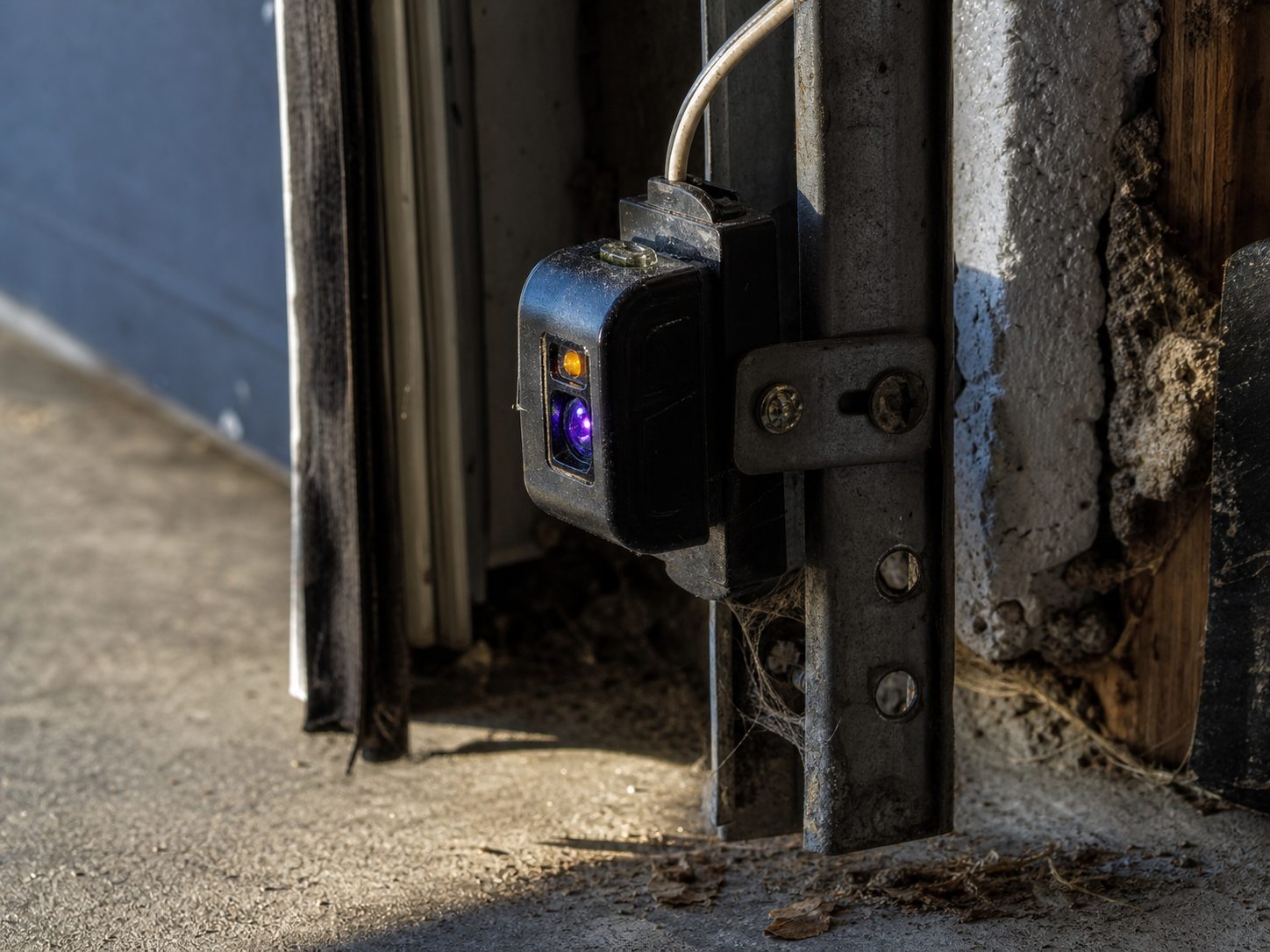
Look at the bottom of your door track on both sides. You will find two small plastic boxes, each with a lens, wired back to the opener. Contractors call them the photo eye pair. One is the sender, one is the receiver, and they hold an invisible tripwire across the opening. Break that beam while the door is coming down and the opener reverses instantly. That is federal safety law, and it is a good one.
The trouble is that sunlight is loaded with the same infrared wavelength the beam uses. When the sun drops low enough in the western sky to shine directly onto the receiving safety sensor, the receiver gets flooded. It can no longer pick its own beam out of the glare, so it reports the doorway as blocked. The opener sees a blocked beam and does the only safe thing it knows: it stops the door and sends it back up.
Why afternoons, and why your house in particular
Sun angle is the whole story. In the morning the sun is in the east and behind the door, so the eyes see nothing but shade. As the day turns, the sun swings west and drops toward the horizon. By late afternoon, roughly 4 to 6 pm depending on the season, it sits at exactly the wrong height to fire down the length of your driveway and into a west or southwest facing opening.
Here in Chicagoland the effect gets sharper twice a year. Around the spring and fall, the sun sets closer to due west and hangs lower for longer, so a door in Arlington Heights or Buffalo Grove that behaved all summer suddenly starts reversing every evening. Add a light dusting of snow melt or a wet driveway in a Northbrook winter and the glare bounces up off the ground into the sensor too. I have seen the same door in Wheeling act perfectly from December through February, then start acting up the first clear week of March.
So before you spend a dime on parts, notice the timing. A door that only misbehaves when the sun is low, and closes fine on an overcast day or after sundown, is telling you the mechanics are healthy. The garage door opener and the springs are almost certainly fine.
The five minute test before you call anyone
You can confirm the diagnosis yourself without tools. Do this the next time the door refuses to close in the afternoon.
- Walk down to the two safety sensors at the base of the track and look at the little indicator light on each. On most LiftMaster, Chamberlain, and Genie units the receiving eye holds a steady glow when the beam is good.
- Watch that light while the sun is on it. If it is flickering, dim, or out entirely while its partner stays lit, the sun is washing out the beam. That is your answer.
- Cup your hand or a scrap of cardboard above the receiving eye to shade it from the sun, without touching the lens or blocking the beam across the doorway.
- With the eye shaded, press the wall button and let go. If the door now runs all the way down on its own, you have proven it is sun glare, not a failing sensor.
- If the door still reverses with the eye fully shaded, stop. Now you may be looking at a real alignment or wiring fault, and it is time to bring in a pro.
The fixes, from a roll of cardboard to a real repair
Shade the receiving eye
The cheapest fix in the trade is a small hood over the sun facing sensor. A cardboard tube, a scrap of dark plastic, or a store bought sensor sun shield taped just above the lens will block the direct glare while leaving the beam clear. Think of it as a ball cap for the sensor. Costs a few dollars and buys back your evenings.
Swap the two eyes
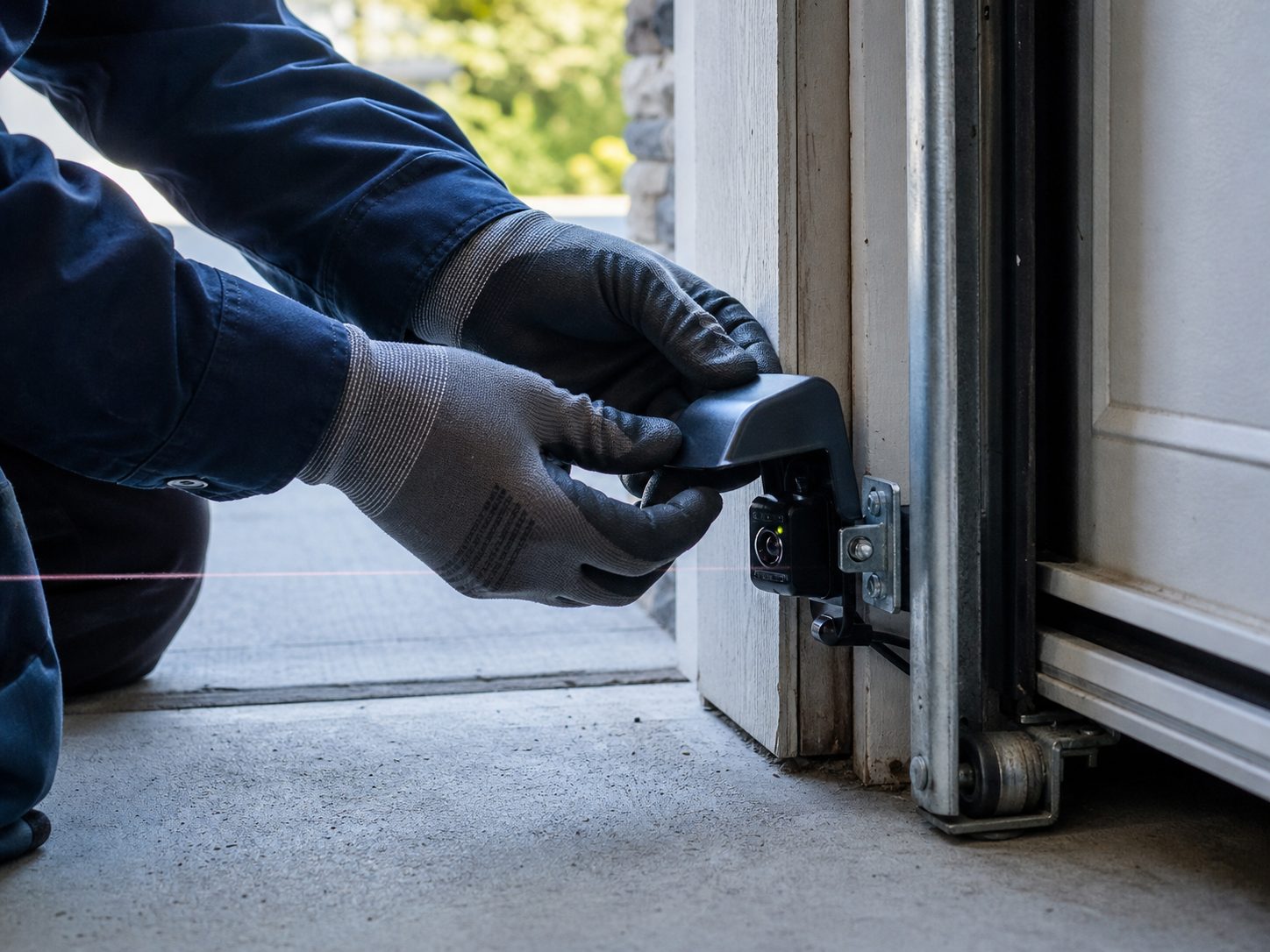
Because only the receiving eye is sensitive to glare, moving the sender to the sunny side and the receiver to the shaded side often clears the fault outright. This means unclipping both sensors and reversing them on the brackets. It is straightforward, but the wiring and the alignment have to be exact or the door will not close at all, so if you are not comfortable at the opener rail, leave it to a technician.
Realign and check the wiring
Sensors that are knocked out of true, or that have a nicked wire from a weed trimmer or a stray bumper, will mimic the sun problem and fail at random hours too. A proper visit includes squaring both brackets, confirming a steady beam, and checking the run of low voltage wire back to the opener. While a tech is there it is worth a quick full door check, since a sensor call is a good moment to catch a worn roller or a fraying lift cable before it strands you.
When it is genuinely not the sun
Sun glare is the common answer, but it is not the only one, and the tell is timing. If the door reverses at all hours, in the dark, or on cloudy days, the sun is off the hook. Now you are looking at a mechanical or electrical fault: a sensor truly out of alignment, a pinched wire, a bad control board, or a door that is out of balance and tripping the force setting on the way down.
Balance matters more than people think. If a spring has weakened, the opener has to strain to lower the door, the travel limit and force setting get confused, and the door can reverse for reasons that have nothing to do with the eyes. That is a spring repair question, not a sensor one, and it is not a safe DIY job. A quick manual release test, lifting the door by hand with the opener disengaged, tells a tech in seconds whether the balance is the real culprit.
If the door slams down instead of reversing, or will not respond at all after dark, treat that as urgent and book emergency garage door repair rather than living with it. A door that ignores its own safety beam is a door you do not want kids or pets walking under.
Still fighting your door every evening?
We diagnose the sensor first and fix the cheap stuff before we ever talk parts. Straight pricing, no upsell. See our repair pricing or reach out and we will take a look.
Request an inspectionFrequently asked questions
Why does my garage door only refuse to close in the late afternoon?
Because that is when the sun sits low in the western sky and shines directly into the receiving safety sensor at the base of your door. The glare floods the sensor with infrared light and drowns out its own beam, so the opener reads the doorway as blocked and reverses the door. Once the sun drops below the horizon the beam reads clean again and the door behaves.
Is it safe to hold the wall button to force the door shut?
Holding the button does override the sensor and pulls the door down, and it is fine as a one time workaround if you can see the doorway is clear. It is not a fix, though, and you should never make it a habit, because you are defeating the very safety system that stops the door on a child, a pet, or a car. Shade the sensor or swap the eyes so you do not have to.
Can I fix sun glare on the sensor myself?
Often yes. Taping a small cardboard hood or a store bought sun shield above the receiving eye to block direct sunlight solves it for many homeowners in a few minutes and a few dollars. If shading the eye does not help, or if the door still reverses on cloudy days and after dark, the problem is alignment, wiring, or balance, and that is worth a professional visit.
How much does it cost to fix a garage door that reverses from sun glare?
If it is purely glare, the fix can be nearly free, a few dollars for a sensor shield or nothing at all to swap the two eyes to shaded and sunny sides. A full service call to realign the sensors, check the wiring, and run a balance test costs more but confirms nothing mechanical is wrong. You can see typical ranges on our pricing page before you book anything.