

Why Summer Humidity Makes Garage Doors Stick in Wheeling IL
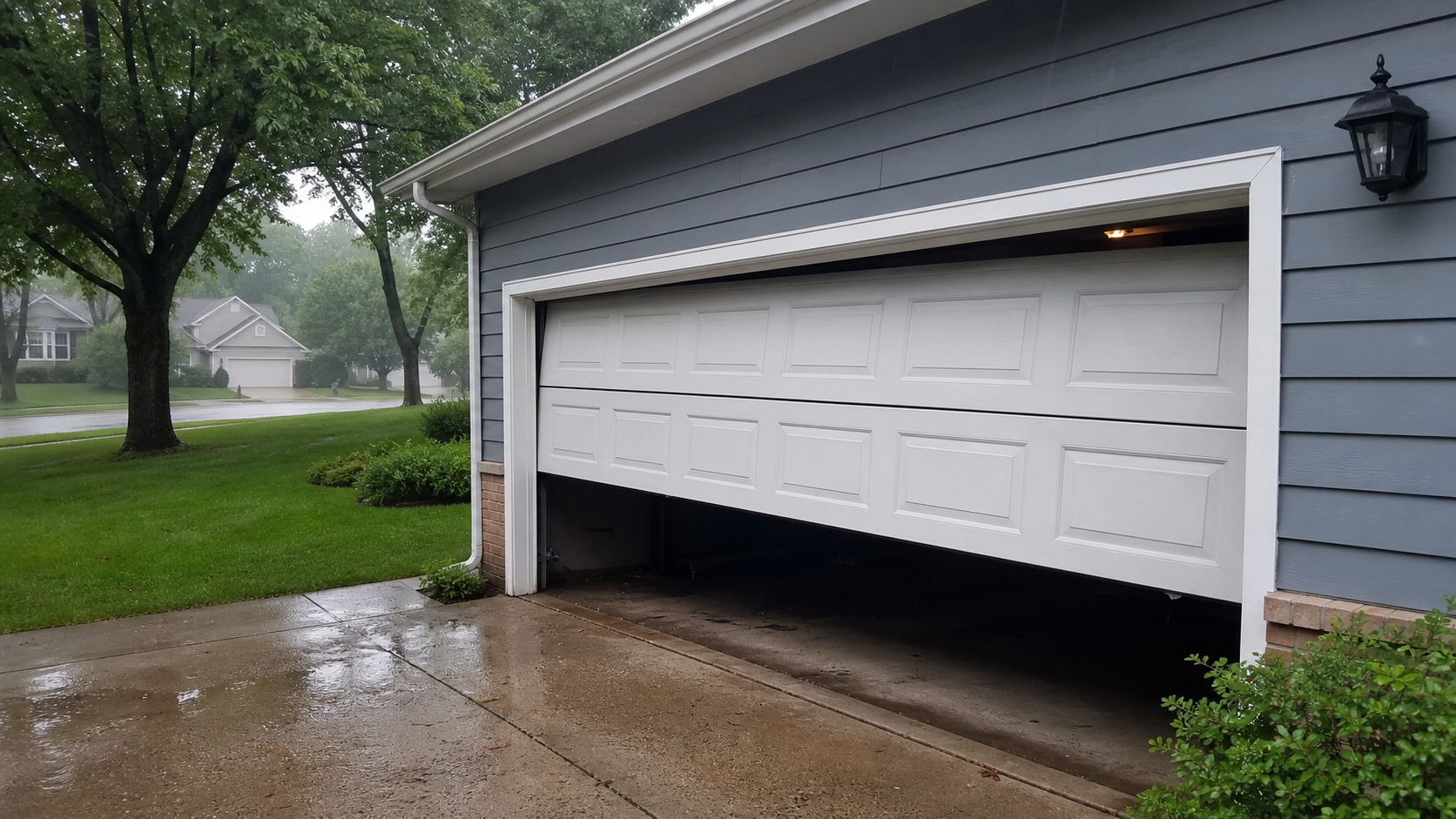
Summer in Wheeling runs heavy. The air coming off Lake County sits at 80 to 85 percent relative humidity through July and August, and your garage door feels it long before you notice. A door that rolled open without complaint all spring starts dragging, grinding, and sitting crooked in the frame. The opener reverses for no apparent reason. The bottom seal grabs the concrete on the way down. This is not a mystery. It is humidity, and it follows a predictable pattern across the Chicagoland north suburbs every single year.
Most of these calls get misdiagnosed on the first try. Homeowners replace opener batteries, fiddle with remotes, and sometimes call for same-day service on a door that technically still moves. The actual problem is usually cheaper and faster to fix. But getting there means understanding which specific components are reacting to moisture and why, so the repair targets the right parts instead of just the symptoms.
Why Summer Humidity Hits Illinois Garage Doors So Hard
Illinois summers combine heat with persistent moisture in a way that punishes outdoor mechanical systems. The July average relative humidity in the Chicago metro runs between 72 and 82 percent. Lake County adds a layer of damp overnight air that keeps surfaces from drying out even on warmer days. A garage door sits in that environment for weeks, cycling up and down multiple times daily, while humidity slowly works into every joint, seam, and rolling surface.
Garage doors are not one material. A typical double-car door in Wheeling or Buffalo Grove mixes galvanized steel skins, a wood or composite frame, rubber seals, zinc-plated hardware, and nylon or steel rollers. Each material responds to humidity differently. Steel expands with heat. Wood absorbs moisture and swells. Rubber softens and becomes tacky. Zinc corrodes at accelerated rates when moisture and road salts from the driveway combine. Summer attacks all of these failure modes at once.
The freeze-thaw cycle gets most of the attention in Illinois winters. Summer humidity is the quieter problem. It builds gradually, and by the time a homeowner notices the door sticking, the underlying condition has usually been building for four to six weeks.
The Components That Fail First
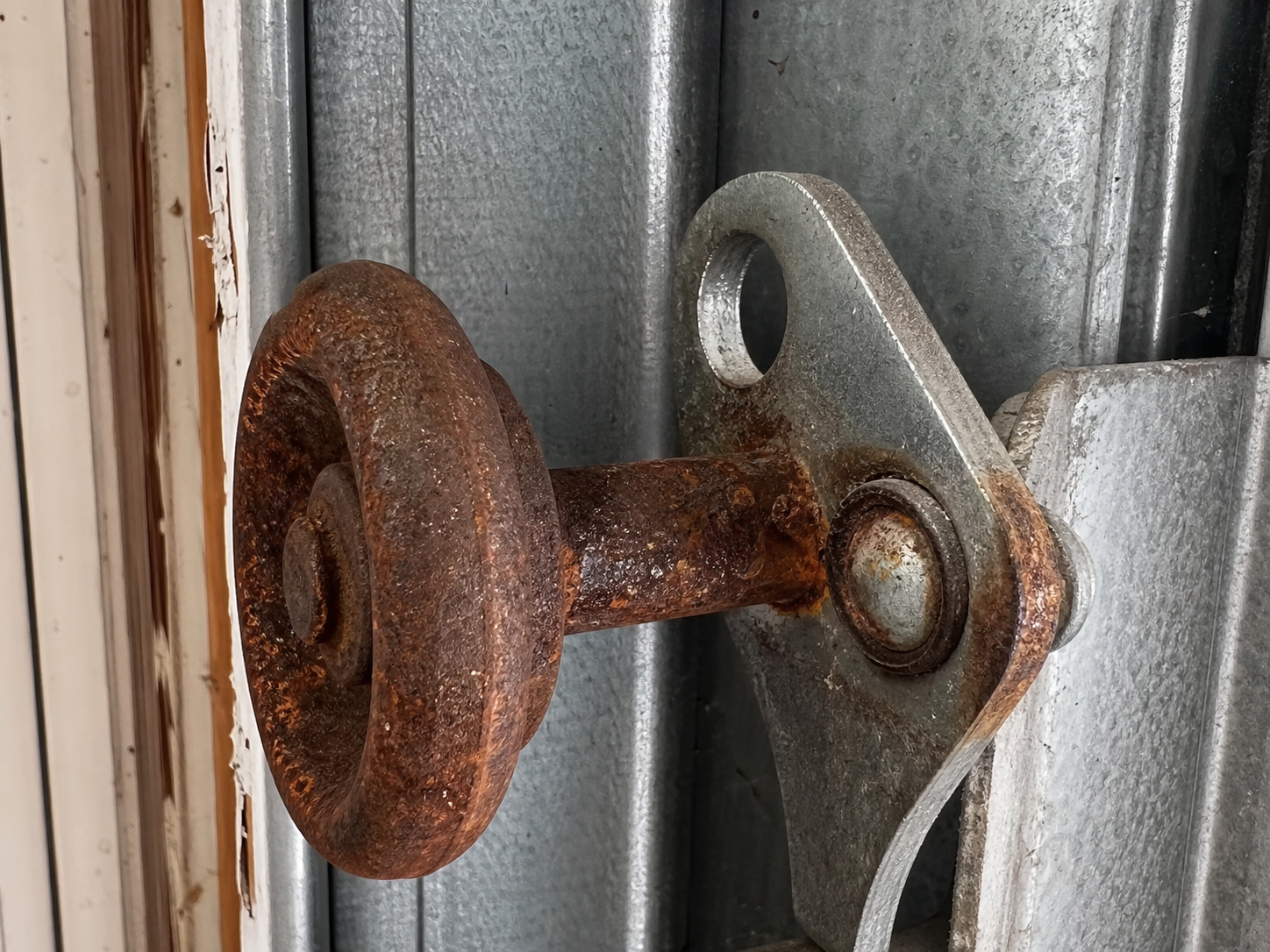
The roller stem is a short steel shaft that sits inside the track bracket and carries the roller wheel. It is always under load, always vibrating, and always exposed. When a door goes unlubricated into a humid summer, that stem oxidizes. The surface rust turns smooth steel into rough steel, and a roller that once spun freely starts dragging. You hear it as a faint grinding on the way up, or a slightly heavier sound when the door settles at the top.
Once the roller stem corrodes enough to drag, the bearing plate at the top corner of the door takes additional strain. The bearing plate is a steel bracket that holds the door in the track frame at the top pivot point. It is not designed to compensate for a dragging roller, and sustained extra friction degrades the bearing inside it. A bearing plate that is failing will sometimes make a squealing sound at the top of travel that lubricant does not fix.
For professional garage door roller repair, corroded stems and degraded bearing plates are the most common finding on north-suburbs summer calls. A full roller replacement on a two-car door runs $90 to $200 depending on roller type and how many are worn. Do not try to lubricate through significant stem corrosion. Spray lubricant on a corroded stem slows the grinding for a few days and then you are back to the same problem.
The hinge is the next component to check. Each hinge is a flat steel bracket at the joint between door panels. It allows the panels to fold as the door travels the horizontal track in the ceiling. In high humidity, an unlubricated hinge surface-rusts. A seized hinge does not pivot cleanly. The panel shift is visible: under door weight, sections separate slightly at the joint, and the door sits uneven in the frame when open.
Track Alignment and the Wood Problem Most People Miss
Track alignment on a properly installed door leaves roughly a quarter inch of clearance between the door edge and the vertical track wall. That gap is tight enough to contain the rollers and wide enough to let the door travel without contact.
Here is what humidity does to that clearance: most residential garage doors in northern Illinois, even doors with steel skins, have a wood or composite subframe. That frame absorbs moisture slowly over weeks of high humidity. The panels gain a small but real amount of thickness. A quarter inch becomes an eighth. The door starts rubbing the track wall. The rubber weather seal along the bottom edge becomes tacky and grabs the concrete rather than sliding cleanly over it.
You feel this as resistance at the bottom of travel. The door seems to stick right at the moment it seats. On the way up, the opener is working harder than normal and may be running longer to fully open the door. On the way down, the door thunks into the floor and the opener cuts power abruptly.
Track alignment should be checked any time a door develops new drag. The fix is sometimes a simple bracket adjustment at the lag bolt. Other times the door frame itself has shifted enough that the vertical track sections need to be reset. Either way, lubricating a door that is in active contact with the track wall makes the situation worse, not better. Lubrication helps rolling parts. It does not fix a door that is physically touching the steel.
What the Torsion Spring and Drum Are Actually Experiencing
A garage door spring repair call in August often traces back to a problem that started in late June. The sequence is consistent: humidity causes increased drag in the rollers and track. The opener applies more force to compensate. The torsion spring, which counterbalances the door weight on every cycle, starts operating near its upper mechanical limit repeatedly. On a door with 15,000 or more spring cycles already on it, that added strain accelerates the timeline to failure.
The drum at the top corners of the door is part of the same system. The lift cable winds around the drum as the door rises. In humid conditions, if the cable has any early-stage fraying or the drum flange has picked up surface rust, that wear accelerates. A garage door cable repair in summer often reveals a cable that has been rubbing against a corroded drum edge for weeks. Replacement cost runs $110 to $200 per side depending on cable diameter and whether the cable drum needs to be replaced alongside it.
How the Opener Reacts to a Door That Is Working Harder
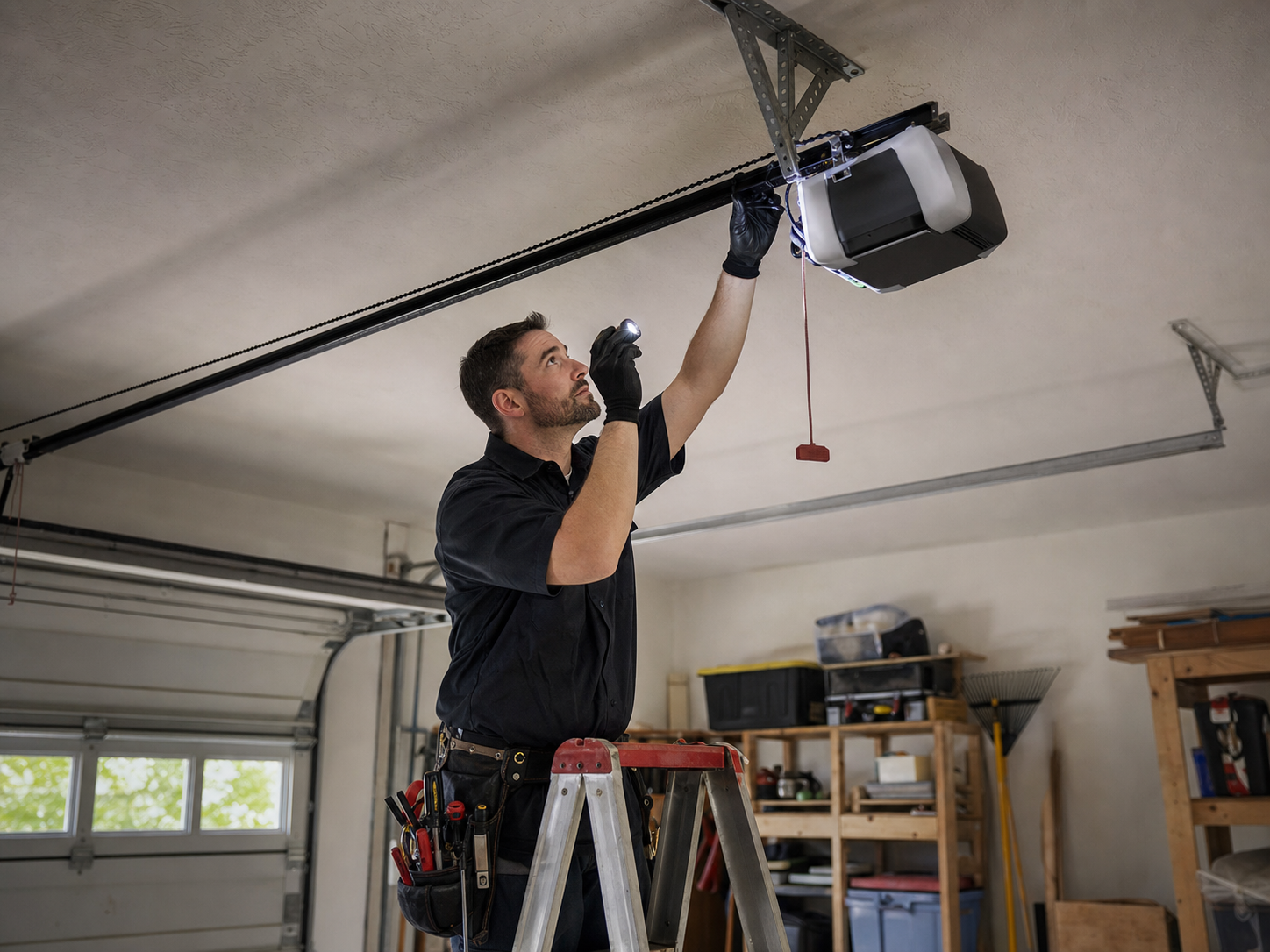
The opener rail is the aluminum track the trolley travels when the door moves. On chain-drive openers, the chain sags slightly in summer heat, increasing slap and vibration. On belt drives, the belt stretches. Either way, the opener drive system is running a little looser at the same time the door itself is harder to move.
Modern openers have a force setting, a calibrated resistance threshold that tells the motor when to stop pushing or pulling. A door made heavy by humidity and roller friction will trip that force setting earlier than it was calibrated to. The result: the door reverses before fully opening, or stops midway down without completing the close cycle. The safety sensor gets blamed. Usually it is not the sensor. The photo eye and safety sensor alignment are often perfectly fine. The problem is that the opener’s force limit was calibrated for a door in normal mechanical condition, not a door that gained 15 to 25 percent in operational resistance from summer friction.
Adjusting the travel limit or force setting without fixing the underlying drag just moves the problem. The opener compensates for a few weeks, then starts tripping again as conditions worsen. A proper garage door opener repair diagnostic should include the full door, not only the opener head. Any technician who adjusts the force setting on a sticky door without addressing why it is sticky is not diagnosing the problem.
A Balance Test You Can Do Before Calling Anyone
One check any homeowner can safely perform: the balance test. Pull the manual release cord, the red cord hanging from the opener rail. This disconnects the trolley and lets the door move freely by hand. Lift the door to roughly waist height. Let go. A door in proper mechanical balance will hold position, drifting no more than two or three inches in either direction. A door that drops quickly is under-balanced, meaning the torsion spring is not providing enough counterforce. A door that shoots upward is over-tensioned.
Humidity-related drag can mask an out-of-balance door during normal operation because the opener is compensating. The manual test removes that compensation. If the door fails the balance test, that is a job for a technician. Adjusting torsion spring tension is a two-person task with specialized winding bars. The stored energy in those springs is not something to improvise around.
While the door is disconnected, check the weather seal along the bottom edge. A healthy weather seal is flexible, compresses evenly across the full width, and releases from the concrete floor without sticking. A seal that has hardened in the heat, cracked along its length, or deformed from contact will create binding at the floor even after every other component has been addressed. Weather seal replacement is simple and inexpensive, $30 to $70 for materials on most residential doors. It is worth doing at the first sign of sticking at the bottom of travel.
How This Pattern Plays Out Across Wheeling, Northbrook, and the North Suburbs
Wheeling, Buffalo Grove, Arlington Heights, Northbrook, and the towns running north through Lake County all sit in the same humidity corridor. Lake County gets additional moisture from the lake effect that keeps dew points elevated well past sunset. Doors that face north or east, which get less afternoon sun for drying, tend to develop humidity symptoms sooner than south-facing doors in the same neighborhood.
On a typical north-suburbs summer call, the sequence looks like this: the door starts dragging in early July, the homeowner notices by mid-month, and a technician finds corroded roller stems on three or four rollers, a hinge that has lost free pivot, and an opener that has been fighting increased resistance for two weeks. Total repair scope is usually $150 to $350 and the job takes under two hours. Left alone, the same door can snap a torsion spring or fray a lift cable before Labor Day. That job runs $250 to $480 depending on spring type and door weight. The maintenance visit is substantially cheaper.
Check all garage door services available in your area, or review garage door repair pricing to get a realistic sense of what a diagnostic visit costs before you call. If the door will not open or close at all, same-day emergency garage door repair is available across Chicagoland. A door stuck open in July is a security problem. Do not leave it for more than a day.
The best approach for any homeowner in the north suburbs is a pre-summer service call in late April or early May, before humidity peaks. Lubricate the rollers, hinges, torsion spring, and bearing plates. Test the balance. Inspect the weather seal. That 45-minute visit, typically $75 to $120, avoids the larger failures that develop when friction builds through June and July unaddressed. Learn more about about Garage Doors Illinois and our approach to service in this region.
Questions About Humidity and Garage Doors in Illinois
Will lubricating the door myself fix a humidity-related sticking problem?
Lubrication helps rolling parts work better: rollers, hinges, the torsion spring coils, and the bearing plates all benefit from a quality silicone or lithium-based spray applied every six to twelve months. But lubrication does not address the structural causes of humidity damage. If the roller stems are corroded past the surface, if the track alignment is off because the wood frame swelled, or if the weather seal has hardened and is gripping the floor, a spray lubricant will reduce noise for a short time and then the problem returns unchanged.
Apply lubricant after identifying and fixing the root cause, not as a first response to drag. Also avoid spraying near the photo eye or safety sensor at the base of the track. Overspray on the lens mimics a blocked sensor signal and causes the door to reverse unexpectedly.
How do I tell if the door is sticking from humidity or from a failing torsion spring?
Pull the manual release cord to disconnect the opener. Try lifting the door by hand from the bottom to roughly waist height. A spring failure makes the door extremely heavy because the torsion spring counterbalance is gone and you are lifting the full panel weight without mechanical assistance. A humidity-related sticking problem typically still allows the door to move by hand with normal effort, even if it binds at a specific point in the travel. The door feels heavier than usual but is not impossible to lift alone.
If the door does not move by hand with reasonable effort, or if you hear a sudden loud bang before the door became difficult to operate, stop and call a technician. Do not force a door with a suspected spring failure. A broken torsion spring can cause the door to drop suddenly and without warning.
How often should a garage door be serviced in the Wheeling area given Illinois humidity?
Twice a year is the standard recommendation for north-suburbs Illinois homes. Schedule the first service in late April or early May, before peak humidity arrives, and the second in October before freeze-thaw cycles start stressing the hardware. The spring service is the more important of the two in a climate like Chicagoland. It addresses lubricant that dried out over winter, any rust that formed during wet spring conditions, and the weather seal condition before it has to deal with months of heat and humidity.
A full service visit includes lubrication of the torsion spring, rollers, hinges, and bearing plates, plus a manual balance test and a safety sensor alignment check. Most service calls in the Wheeling and Lake County area run $75 to $120 including materials. Compare that to the $250 to $480 a spring failure or cable fraying repair costs, and servicing twice a year is straightforward math.
Can summer humidity damage a steel garage door the same way it damages a wooden one?
Steel doors do not absorb moisture and swell the way wood does, so the track alignment problem from frame expansion is usually smaller. But steel doors are not immune to humidity damage. The hardware inside the door system is steel and zinc alloy, and those components corrode in a sustained humid environment just as they would on any other door type. Roller stems, hinges, drum flanges, and the bottom bracket where the lift cable attaches are all subject to surface rust when unlubricated and exposed to high humidity through a Chicagoland summer.
Steel doors also have a bottom section that sits close to the garage floor, where condensation collects. If the weather seal is degraded or missing, moisture enters the garage and can damage insulated door panels from the inside. Steel doors with polyurethane or polystyrene insulation cores that absorb water through a broken seal become noticeably heavier over time, which adds strain to both the torsion spring and the opener drive system.
Door Sticking This Summer? Get an Honest Diagnosis.
We serve Wheeling, Buffalo Grove, Arlington Heights, Northbrook, and surrounding communities across Illinois. A same-day inspection pinpoints what is actually binding before you pay for parts that are not the problem. Call 847-789-1175 or use the link below.
Request an Inspection